Spirulina: benefits, nutrition and side effects
By the Naturomag editorial team · Published
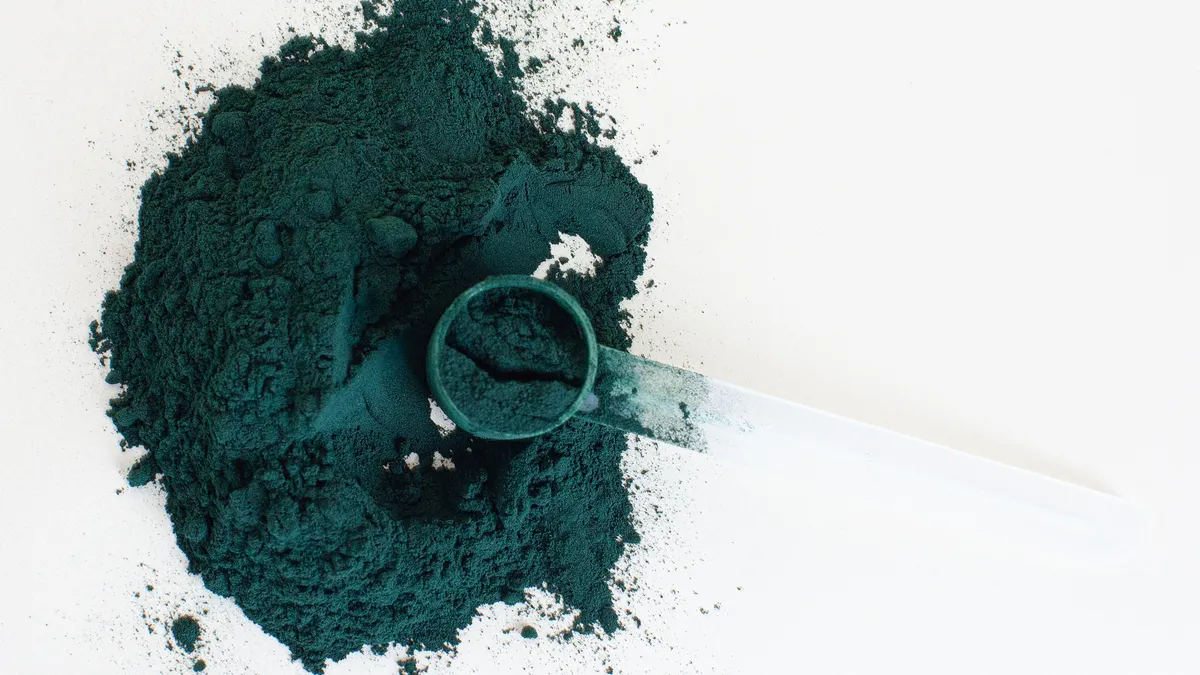
Spirulina's clearest benefit is nutritional density: 1 tablespoon (7 g) of the dried powder brings about 4 g of protein and 2 mg of iron. It is a blue-green microorganism, a cyanobacterium, sold as powder or tablets. Its quality depends heavily on how it was grown.
- Names on labels
- Spirulina platensis, S. maxima, Arthrospira platensis
- Type
- Cyanobacterium ("blue-green algae")
- 1 tablespoon
- 7 g, about 20 kcal
How much protein and iron is in spirulina?
Per tablespoon, calculated from USDA data for dried spirulina:
| Nutrient | Per 7 g | Per 100 g |
|---|---|---|
| Energy | 20 kcal | 290 kcal |
| Protein | 4.0 g | 57.5 g |
| Iron | 2.0 mg | 28.5 mg |
| Copper | 0.43 mg | 6.1 mg |
| Riboflavin (B2) | 0.26 mg | 3.67 mg |
Vitamin B12 is entered as zero in that record (an assumed value), so do not count on spirulina as your B12 source. MedlinePlus also notes that blue-green algae can reduce the iron you absorb from food and supplements.
What have spirulina studies measured?
Mostly blood markers, in small randomized trials. A 2016 meta-analysis pooled 7 of them on blood lipids and found that the results did not depend on the dose (Serban and colleagues, Clinical Nutrition). MedlinePlus finds the evidence too thin for most of the uses spirulina is sold for. Benefits advertised for women, men, skin or hair rest on the nutrition table above more than on trials.
What is blue spirulina?
A blue powder or extract coloured by phycocyanins, the blue pigments of spirulina. In the United States, spirulina extract is a permitted color additive made by filtering a water extract of dried Arthrospira platensis, used in sweets, frozen desserts, yogurts and drinks (21 CFR 73.530). It is a colouring extract, so the protein figures above do not apply to it.
How much spirulina do people take?
Adults have typically used 1 to 10 g a day for up to 6 months. MedlinePlus also reports amounts of up to 19 g a day over 2 months. Starting near the low end lets you judge how your stomach reacts and whether you like the strong, marine taste.
How do you use spirulina powder?
Stir it into something strongly flavoured: a fruit smoothie, a dressing or a dip hides its marine taste. Tablets avoid the taste altogether. Whatever the form, count the grams: label servings differ, and the nutrition table above scales with weight, so half a tablespoon gives half the protein and iron.
Spirulina is a supplement to meals, not a main protein source: at 4 g of protein per spoon, a plate of food still does most of the work.
Is spirulina worth it for women, men or athletes?
Judge it by what a spoon adds to your diet. The iron (2 mg) and copper (0.43 mg) are the interesting part for a small volume; the protein is a modest bonus. Spirulina is also sold for weight and other goals, yet MedlinePlus finds too little evidence for most uses. A powder chosen for its nutrients, from a tested batch, is the sensible purchase.
Is spirulina contaminated?
It can be, and that is the point to check before buying. Contaminated blue-green algae may carry microcystins (liver toxins), heavy metals or harmful bacteria, with wild-harvested products at higher risk than cultivated ones. In 2011, a United States Pharmacopeia expert committee reviewed 31 adverse event reports and gave Spirulina maxima and S. platensis its Class A safety rating. A good product states:
- the species and where it was cultivated;
- a lot number;
- a lab result for microcystins and heavy metals.
What side effects and interactions come with spirulina?
Nausea, vomiting, diarrhea, headache and dizziness are the common complaints. MedlinePlus advises against it in pregnancy and breastfeeding, flags children as more sensitive to contaminants, and notes it may worsen autoimmune diseases by increasing immune activity. Stop at least 2 weeks before surgery.
Moderate interactions: diabetes drugs (blood sugar may fall too low), immunosuppressants (weaker effect), blood thinners (more bruising or bleeding).
Which other green and herbal powders are worth comparing?
Compare spirulina with a fungus sold the same way: lion's mane powder and its studies. The full list sits on our medicinal herbs page, and nutrition-minded readers often go on to herbalism certification courses.
Frequently asked questions
Is spirulina a plant?
Strictly, no. It is a cyanobacterium, though shops list it with herbs and algae.
Sources
- Blue-Green Algae, MedlinePlus, National Library of Medicine, 2026
- Seaweed, spirulina, dried (FDC ID 170495), USDA FoodData Central, 2018
- Serban M. C. et al., Spirulina and plasma lipids: meta-analysis, Clin Nutr, PubMed, 2016
- Marles R. J. et al., United States Pharmacopeia safety evaluation of spirulina, PubMed, 2011
- 21 CFR 73.530, Spirulina extract, Legal Information Institute, Cornell, 2026