Aloe vera: benefits of the gel, juice risks and side effects
By the Naturomag editorial team · Published
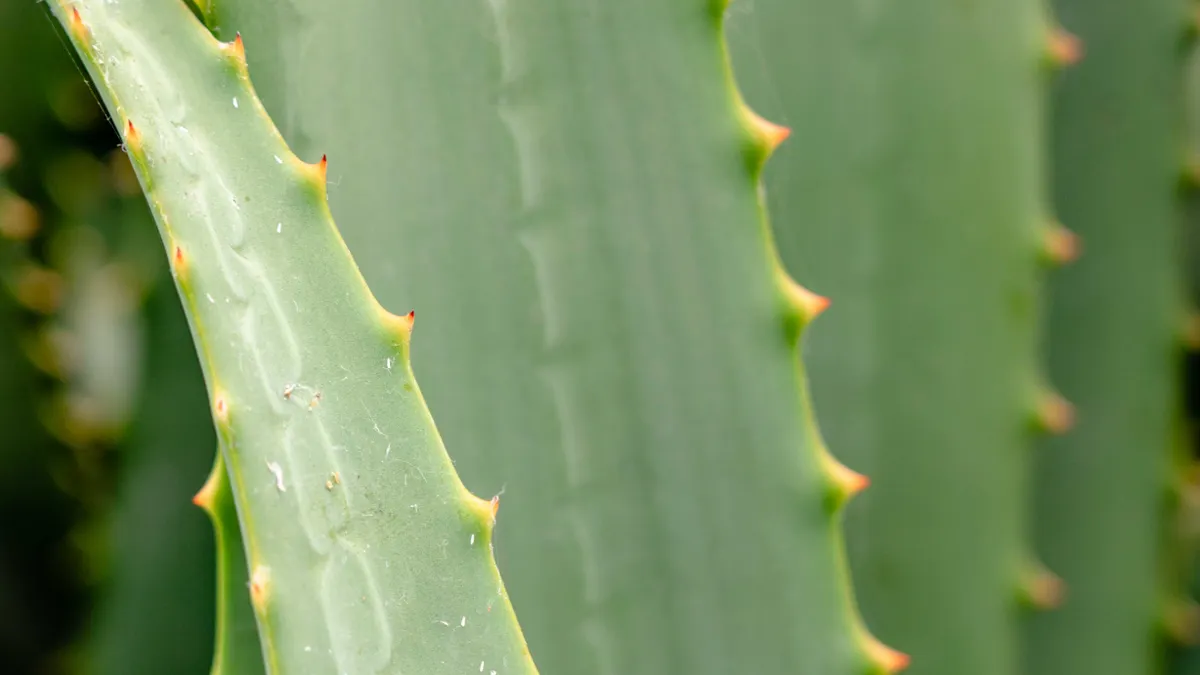
Aloe vera's best-supported benefit is on the skin: the clear inner gel may speed burn healing and ease burn pain. Drinking it is a different story, because the yellow latex and whole-leaf extracts carry real risks.
- Gel
- Clear inner leaf; used on skin and in drinks
- Latex
- From the outer layer; a strong laxative
- Whole leaf
- Crushed leaf holding both
What is the difference between aloe gel, latex and juice?
They come from different layers of one leaf. The gel sits inside. The latex comes from the outer layer. A whole crushed leaf mixes both. "Aloe juice" on a bottle can mean several things, so the label should say which part was used and whether the product was filtered (decolorized).
What has aloe been used for, then and now?
Skin care first, for a very long time. NCCIH records its use in ancient Greece, Rome, Babylonia and China, for skin conditions and wound healing, and even against premature graying. Today it is promoted on the skin for acne, psoriasis, burns and radiation damage, and by mouth for weight loss, diabetes and inflammatory bowel disease. A promotion is not a result: the research behind each use differs widely.
Does aloe vera heal burns?
It may shorten healing time. A 2007 systematic review pooled 4 controlled trials with 371 patients and found healing about 8.8 days shorter than with the comparison treatments (Maenthaisong, Burns). Its authors called the evidence inconclusive because products and measures differed, while pointing to a possible benefit on first and second degree burns. NCCIH reaches a similar view: topical gel may speed healing and reduce pain.
What else is aloe gel used for on skin?
Acne is the other studied use: 2 small studies suggest the gel, added to other treatments, may improve it. Applied to skin, aloe gel is generally well tolerated; burning, itching and rash can occur.
Is it safe to drink aloe vera juice?
Short-term oral gel use, up to 42 days, appears safe; whole-leaf and latex products are the concern. A 2023 review of laboratory and animal studies concluded that food-grade drinks with no more than 10 ppm of aloin were not genotoxic. That figure is the one to look for. Leaf extracts taken by mouth have been linked to acute hepatitis.
Why is aloe latex a problem?
It causes cramps, abdominal pain and diarrhea. Overuse may also raise the side effects of heart drugs such as digoxin. Animal studies tied a non-decolorized whole-leaf extract to cancer of the digestive tract, and the International Agency for Research on Cancer classes that form as a possible human carcinogen.
Which other uses have been studied?
Several, with less research behind them than burns. NCCIH reports a small amount of research suggesting that aloe gel on the skin or lining may help people with:
- psoriasis and lichen planus (a very itchy rash of the skin or mouth);
- genital herpes;
- skin damage from radiation therapy;
- sores in the mouth caused by dental appliances;
- oral submucous fibrosis, a scarring disease of the mouth.
By mouth, a small amount of research suggests aloe may reduce blood sugar and HbA1c in people with diabetes, and a small study found that a specific gel taken for 8 weeks modestly reduced weight and fat mass in adults with overweight or obesity who had diabetes or prediabetes. For eczema, diabetic foot ulcers, irritable bowel syndrome and ulcerative colitis, there is not enough reliable information to say.
Which interactions are reported with oral aloe?
| Medicine or situation | What is reported |
|---|---|
| Digoxin and other cardiac glycosides | Overuse of latex may raise their adverse effects (NCCIH) |
| Blood sugar medicines | Oral aloe may lower blood sugar (NCCIH) |
| Sevoflurane, an anesthetic | Excessive bleeding during surgery reported in a patient who took aloe vera tablets (Memorial Sloan Kettering) |
| Liver | Acute hepatitis linked to leaf extracts taken for as little as 3 weeks (NCCIH) |
If you have an operation planned, aloe supplements belong on the list of everything you take. Memorial Sloan Kettering also notes that aloe gel should not be confused with juice or latex, which contain anthraquinones with a laxative action.
How do you choose an aloe product?
Decide skin or mouth first, then read the label.
- For skin: a gel that names the inner leaf and puts aloe first among its ingredients.
- For drinking: inner leaf, decolorized, with aloin at 10 ppm or less stated.
- Leave aside "whole leaf, non-decolorized" products and anything sold as a latex laxative.
A brand that publishes its aloin test gives you a number to check rather than a promise.
Read the plant part before the marketing. "Inner leaf" points to the gel; "whole leaf" means the outer layer went in too; "decolorized" means the extract was filtered through activated carbon to remove anthraquinones such as aloin. A bottle that states none of the 3 leaves you without the information that matters.
Remember how supplements are sold in the United States: they are not approved before they reach the shelf, and the maker is responsible for their safety and labeling. That is why a published aloin figure and a named plant part are worth more than a claim on the front of the bottle.
How is aloe regulated in the United States and the European Union?
Both have acted on its laxative compounds. In the United States, the FDA required aloe latex to be removed from over-the-counter laxatives in 2002. In the European Union, Regulation (EU) 2021/468 listed preparations from aloe leaves containing hydroxyanthracene derivatives, and aloe-emodin, as prohibited in foods. The General Court annulled the aloe leaf entry on November 13, 2024 (case T-189/21). The European Commission appealed (case C-38/25 P), and under EU procedure the entry stays in force while that appeal is open.
Who should avoid taking aloe by mouth?
Anyone pregnant or breastfeeding: gel, latex and whole leaf taken orally may be unsafe. People on regular medication have a second reason for caution, since herb and drug interactions are possible; oral aloe may lower blood sugar.
Where does aloe sit among other plants?
It is a good lesson in why the plant part matters, like cinnamon bark and its species. All profiles are gathered under plant guides. To learn to make salves and gels properly, look at herbal studies programs.
Frequently asked questions
Can you use the gel straight from a houseplant leaf?
The inner clear gel is the part used on skin. Keep the yellow sap from the outer layer out of it: that is the latex.
Sources
- Aloe Vera: Usefulness and Safety, NCCIH, 2025
- Maenthaisong R. et al., aloe vera for burn wound healing: a systematic review, Burns, PubMed, 2007
- Commission Regulation (EU) 2021/468 on hydroxyanthracene derivatives, European Union, 2021
- General Court judgment in case T-189/21, Aloe Vera of Europe v Commission, EUR-Lex, 2024
- Appeal C-38/25 P, Commission v Aloe Vera of Europe, EUR-Lex, 2025
- Aloe Vera, About Herbs, Memorial Sloan Kettering Cancer Center