Red light therapy: benefits, devices and what the studies measured
By the Naturomag editorial team · Published
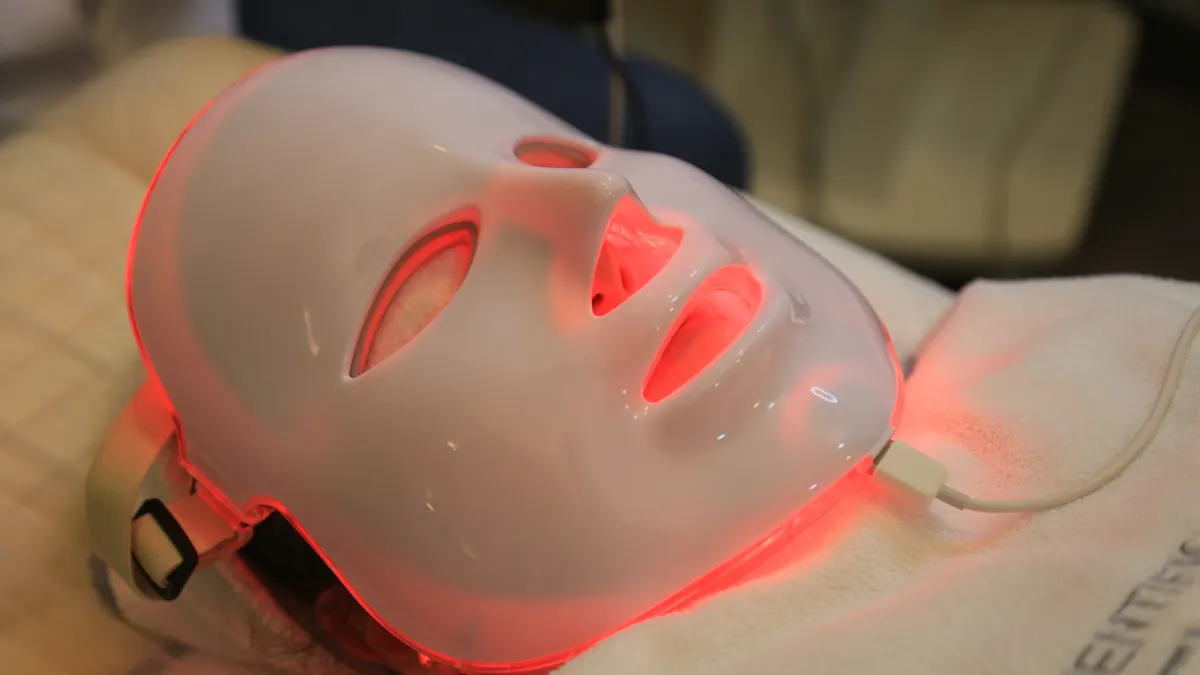
Red light therapy shines low-level red or near-infrared light on the skin, mainly to soften signs of aging and to support hair regrowth. Results are gradual, depend on the device, and fade without upkeep.
- Scientific name
- Photobiomodulation
- Light sources
- LEDs or low-level lasers
- Home formats
- Mask, panel, wand, cap, comb, helmet
- Typical home device price
- $100 to more than $1,000 (AAD)
- Protect
- Eyes, as the instructions require
What is red light therapy?
A non-invasive use of red or near-infrared light that does not heat or cut the skin. The American Academy of Dermatology (AAD) also calls it photobiomodulation. Office devices are more powerful than the ones sold for home use. The Cleveland Clinic describes the proposed mechanism: light is absorbed by cells and acts on mitochondria, their energy centers, which may support collagen production.
You will also meet the names low-level laser therapy, non-thermal LED light, soft laser, cold laser and biostimulation. The Cleveland Clinic traces the interest to NASA experiments on plant growth in space, later explored for wound healing in astronauts.
What are the benefits of red light therapy for the skin?
Studies report subtle to noticeable changes in fine lines, texture and tone. According to the AAD, LED red light can act on fine lines, wrinkles, dark spots, rough or loose skin and redness. It cites a study of 90 patients given 8 facial treatments over 4 weeks, in which more than 90% noticed some improvement.
A controlled trial published in 2014 followed 136 volunteers. Treated groups had 30 sessions, 2 a week, and showed better complexion, smoother measured roughness and higher collagen density on ultrasound than 23 untreated controls.
The AAD also notes that researchers use different devices and schedules, so results cannot be compared from one study to another. Buy for the evidence on your goal, not for the largest panel.
Can red light therapy regrow hair?
For hereditary hair loss, large randomized trials found some regrowth, with thicker and longer hairs. The AAD reports FDA-cleared combs, caps and helmets for this use. It adds that no device regrows a full head of hair and that results for other causes of hair loss are not studied in the same way.
If hair is your goal, take a photo of your parting before you start and again every month, in the same light, so that slow changes show up.
What else is red light therapy tried for?
Several skin concerns are under study, with different levels of proof. The Cleveland Clinic lists these promoted uses:
| Concern | Where research stands |
|---|---|
| Wrinkles, fine lines, age spots | The most studied group, see the trials above |
| Hereditary hair loss | Randomized trials and FDA-cleared devices |
| Acne, scars, stretch marks | Being studied, mostly in small trials |
| Wound healing, sun damage, texture | Promising early work, more trials needed |
The Cleveland Clinic points out that many published studies were small, lacked a placebo group, or were done on animals or cells. A study with a sham light, many participants and a clear measurement is the kind worth trusting.
How do you choose a red light therapy device?
Match the device to your goal and read its clearance wording.
- Purpose: a hair device says hair loss, a skin device names the skin concern.
- FDA cleared (or 510(k) cleared) means the FDA considers the device low risk. It says nothing about how well it works.
- "FDA approved" or "FDA certified" on such a device is marketing wording: the FDA clears these devices.
- Instructions: session length and frequency come with the device and differ between models.
| Format | Area | Good to check |
|---|---|---|
| Face mask | Face | Fit and eye shielding |
| Wand | Small zones | Time needed to cover each zone |
| Panel | Larger body areas | Recommended distance and goggles |
| Cap or comb | Scalp | Clearance for hair loss |
How do you use a red light device at home?
Follow the maker's schedule on clean skin, with the eye protection it asks for.
- Remove makeup and sunscreen so light reaches the skin.
- Put on goggles if the instructions require them.
- Keep the distance and session time stated for your model.
- Take a photo in the same light every few weeks to judge change honestly.
- Stop if your skin stays red, sore or darker.
Home devices are generally less powerful than office equipment, so patience and regular use count. Keep the packaging and manual: they carry the clearance wording and safety directions.
Is red light therapy safe?
In the short term it appears safe; long-term effects are still unknown. Unlike ultraviolet light, red light has not been found to cause cancer, the AAD says. Reported effects are mild pain or irritated skin. The facts to know:
- Medicines that make skin more sensitive to light can interact with it.
- Skin conditions with light sensitivity, such as lupus, can worsen.
- Darker skin tones are more sensitive to visible light, which can leave long-lasting dark spots.
- Eyes need protection when the instructions say so; goggles, not sunglasses, when goggles are called for.
The Cleveland Clinic adds that overuse or ignoring directions can damage skin or eyes.
What does a professional red light session involve?
Cleansed skin, eye shields, then a set time under the light. Nothing is injected and there is no downtime. Sessions are repeated, and upkeep visits keep the effect. For people who want a broader routine than a single device, a naturopath looks at sleep, diet and skin habits together. Other hands-on options are listed in our alternative medicine therapies.
In a clinic, red light is often one step in a wider plan. The AAD describes dermatologists adding it to a medicated cream, microneedling or a chemical peel for aging skin, and reports a large study where patients given in-office red light after a laser session had less discoloration and swelling.
Office treatment or home device: which should you choose?
Office equipment is stronger; a home device is convenient and needs steady use.
| In an office | At home | |
|---|---|---|
| Power | Higher | Lower, mostly LED |
| Guidance | A provider sets the plan | You follow the manual |
| Cost | Paid per visit | $100 to more than $1,000 once |
| Often used | With other skin procedures | On its own or for upkeep |
A practical order: decide on one goal, ask what evidence exists for it, then pick the setting you will actually keep up. A mask left in a drawer does nothing, and a course of visits you cannot attend does not either.
For an in-person provider, ask which wavelength and device they use, how many sessions they plan, what they will measure and what each visit costs. A clear answer to all 4 is a good sign.
Frequently asked questions
Is red light the same as infrared?
No. Red light is visible; near-infrared is just beyond what the eye sees. Many devices offer both.
Do you keep results if you stop?
The AAD says follow-up treatments are needed for aging skin and hereditary hair loss, since both continue over time.
Does red light therapy tan your skin?
No. Tanning comes from ultraviolet light, which red light does not contain. Darker skin tones can still develop dark spots from visible light.
Can you use red light therapy with makeup on?
Clean skin is the better choice, since makeup and sunscreen can block part of the light. Follow your device's directions on products.
Does red light therapy produce heat?
It is described as non-thermal light. A device that feels hot on the skin is worth switching off and checking against its manual.
Sources
- Is red light therapy right for your skin?, American Academy of Dermatology
- A controlled trial to determine the efficacy of red and near-infrared light treatment, Photomedicine and Laser Surgery (Wunsch, Matuschka), 2014
- Red Light Therapy: Benefits, Side Effects and Uses, Cleveland Clinic