Lymphatic drainage massage: how it works and what to expect
By the Naturomag editorial team · Published
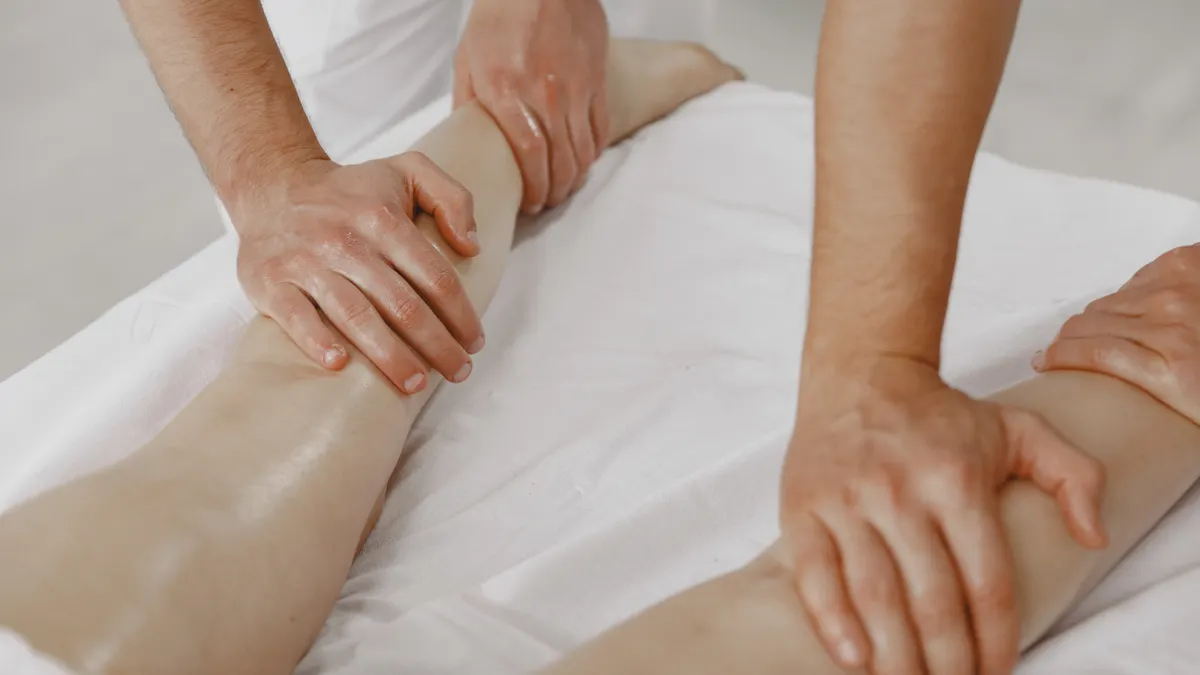
Lymphatic drainage massage is a very gentle, rhythmic massage that guides lymph fluid from swollen areas toward working lymph nodes. Its best documented use is reducing lymphedema swelling; many people also book it for a puffy face or heavy legs.
- Also called
- Manual lymphatic drainage (MLD)
- Pressure
- Light, much softer than a deep tissue massage
- Best studied use
- Lymphedema, as part of complete decongestive therapy
- Specialist title
- Certified lymphedema therapist (CLT)
- Avoid with
- Blood clots, infection, fever, heart disease, kidney failure, stroke
What is lymphatic drainage massage?
A hands-on technique that moves lymph with soft strokes on the skin. Lymph is a fluid carrying white blood cells; the lymph system collects it and returns it to the blood. When that flow is disrupted, fluid builds up between skin and muscle and causes swelling, called lymphedema, as the National Cancer Institute describes.
The Cleveland Clinic explains that the therapist first works the areas that hold lymph nodes, such as the neck and armpits, then coaxes fluid from the swollen tissue toward them. Pressure stays light on purpose: the vessels being targeted lie close to the surface.
Lymph vessels come in layers. The NCI summary describes a fine network in the skin that drains into deeper vessels with muscular walls and valves, which move fluid in one direction. That is why the strokes follow a set direction instead of going back and forth.
How do you recognize lymphedema swelling?
It usually builds slowly, with a heavy or tight feeling in one area. The NCI patient guide describes these signs:
- A heavy, full or tight feeling, often where surgery or radiation took place
- Swelling that may leave a dent when pressed, at least in the early phase
- One arm or leg that looks larger than the other
- Numbness, tingling, weakness or trouble moving the limb
Swelling of this kind is the setting where a therapist with lymphedema training matters most, because the plan combines several tools and not massage alone.
What happens during a session?
You lie still while the therapist applies slow, repeated skin-stretching movements. A typical visit follows this order:
- Questions about your health, surgeries and current swelling.
- Opening work near the neck, armpits and, with your consent, the groin.
- Gentle sequences on the face, arm, leg or abdomen, always toward the nodes.
- For lymphedema, compression bandages or garments afterwards.
It does not feel like a classic massage. There is no kneading and no oil-heavy deep pressure, and many people find it very quiet.
What is complete decongestive therapy?
It is the combined program in which manual lymphatic drainage is used for lymphedema, managed by a certified lymphedema therapist. The NCI summary describes 2 phases:
| Phase | What it includes |
|---|---|
| 1. Reduce the swelling | Skin care, exercise, manual lymphatic drainage and compression bandages, daily for about 15 days on average |
| 2. Keep it down | Skin care, exercise, drainage as needed and compression garments |
Compression is the part you carry home. In the Cochrane review, people who kept wearing a custom sleeve were likely to hold their results at 1-year follow-up.
What are the benefits of lymphatic drainage massage?
The firmest evidence concerns swelling from lymphedema, where it is added to compression. A 2015 Cochrane review gathered 6 trials in women with arm lymphedema after breast surgery or radiation. In 2 trials with 83 participants, adding manual drainage to compression bandaging gave an extra 7.11% reduction in swelling compared with bandaging alone. People with mild to moderate swelling responded better. The method was well tolerated in every trial, and the trials were small, with 24 to 45 people each.
In its professional summary on lymphedema, the National Cancer Institute lists manual lymphatic drainage inside complete decongestive therapy, with skin care, exercise and compression. The first phase is performed daily for an average of 15 days.
| Use people book it for | What stands behind it |
|---|---|
| Lymphedema swelling | Cochrane review and NCI summary, as part of a combined program |
| Puffy face or glow | A popular cosmetic use; the Cleveland Clinic notes facial drainage may reduce puffiness |
| Relaxation, stress | Listed by the Cleveland Clinic among possible benefits |
Who should not have lymphatic drainage?
People with a blood clot or an active infection, among others. The Cleveland Clinic lists these reasons to avoid it:
- Blood clots or deep vein thrombosis
- Cellulitis, another infection or a fever
- Heart disease
- Kidney failure
- Stroke
Therapists also do not work directly over cancerous tissue or skin damaged by radiation. Some people feel tired, nauseous or get a headache after a session.
Can you do lymphatic drainage at home?
Yes: a simplified self-drainage routine exists, best learned hands-on from a trained therapist. The NCI patient guide describes certified lymphedema therapists (CLT) as trained to treat lymphedema, with compression garments among the daily tools. In one trial of 31 people gathered by the Cochrane review, drainage by a therapist plus a compression sleeve did better on swelling volume than self-drainage plus a sleeve. Home routines keep to feather-light strokes toward the nearest group of lymph nodes. The same contraindications apply.
How do you choose a therapist, and how do you become one?
Ask which lymphatic drainage training they completed and how much of their week is spent on it. For swelling after surgery or cancer care, look for the CLT title. For a facial or wellness session, a licensed massage therapist with a drainage course is the usual profile.
The technique is taught as a specialty on top of massage or health training: see lymphatic drainage certification programs. To compare it with other bodywork, read our guide to massage therapy styles. A gua sha face routine is a different, tool-based option for the face.
Frequently asked questions
How many lymphatic drainage sessions do people book?
It depends on the goal. For lymphedema, the NCI describes an intensive phase performed daily for an average of 15 days, followed by maintenance as needed.
Does lymphatic drainage massage help with weight loss?
It moves fluid, not body fat. A change on the scale after a session reflects water.
Is it the same as a Swedish massage?
No. Swedish massage works muscles with firmer strokes; lymphatic drainage uses very light skin movements toward lymph nodes.
Does lymphatic drainage massage hurt?
It should not. The strokes are very light, and pressure that causes pain is more than the technique calls for.
Sources
- Manual lymphatic drainage for lymphedema following breast cancer treatment, Cochrane Database of Systematic Reviews, 2015
- Lymphedema (PDQ), patient version, National Cancer Institute
- Lymphedema (PDQ), health professional version, National Cancer Institute
- Lymphatic Drainage Massage, Cleveland Clinic, 2024