Gua sha: face and body technique, results and safety
By the Naturomag editorial team · Published
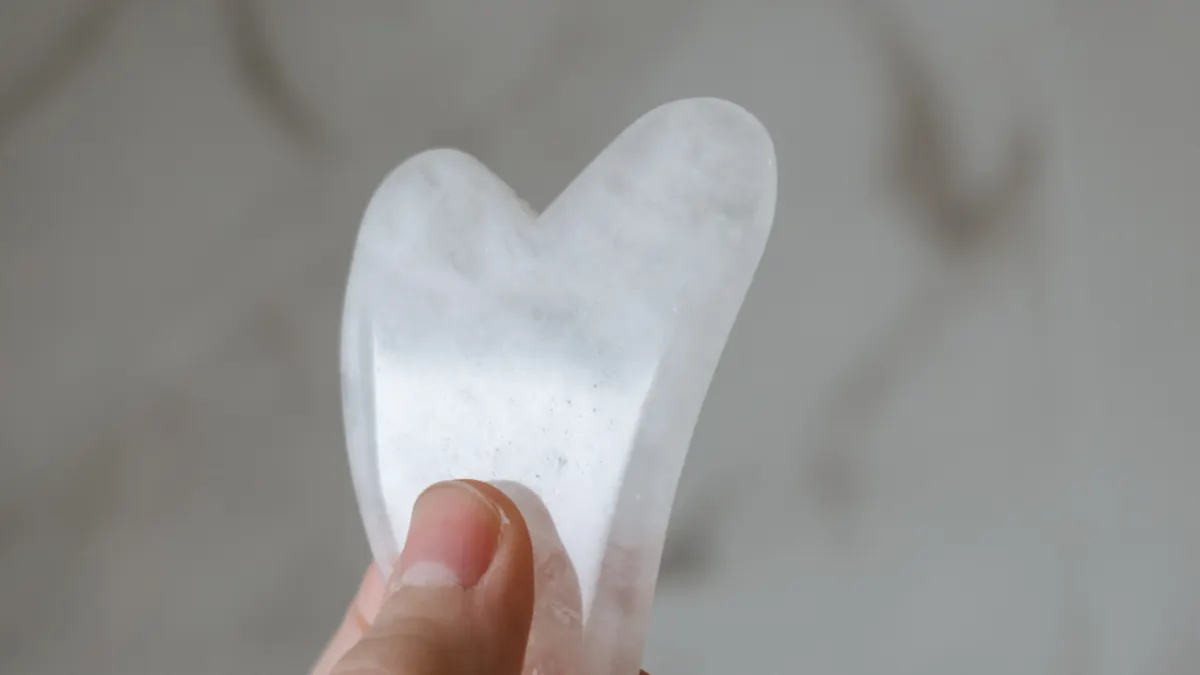
Gua sha is an East Asian technique in which a smooth tool is pressed and stroked over oiled skin: gently on the face, more firmly on the body. Face routines aim at puffiness and a rested look; body sessions are used for tight, sore muscles.
- Also known as
- Scraping, spooning, coining (cao gio)
- Face
- Light pressure, no marks
- Body
- Firm strokes, red or purple spots are common
- Tool materials
- Jade, rose quartz, stainless steel, horn
Does gua sha work?
Body gua sha has early trial support for circulation and neck pain; the face version has much less research.
- In a 2007 pilot study of 11 healthy people, one back treatment raised surface blood flow 4-fold for the first 7.5 minutes, and it stayed higher for the 25 minutes measured.
- In a 2011 randomized trial of 48 people with chronic neck pain, a single session led to less pain after 1 week than a heat pad (a difference of 29.9 mm on a 100 mm scale). The study was open: participants knew which treatment they got.
For before-and-after photos of the face, remember that lighting, posture and fluid change a lot between morning and evening.
For the face, plan on a short-lived change in puffiness and a relaxing few minutes.
How do you do gua sha on your face?
Oil first, then light upward and outward strokes at a shallow angle. Healthline suggests holding the tool at 15 to 30 degrees.
- Wash your face and the tool.
- Apply a few drops of face oil or serum so nothing drags.
- Sweep from the center of the neck up and outward, then along the jaw toward the ear.
- Move to cheeks, then under the eyes with almost no pressure.
- Finish across the forehead toward the temples.
A few slow strokes per area are enough. If skin turns red and stays red, press less.
What results can you expect from facial gua sha?
A fresher, less puffy look for a few hours, and a relaxing ritual. Morning use is popular because faces are often puffier after sleep. To judge it fairly, take photos at the same hour, in the same light, with the same expression, once a week for a month. Compare a side you massaged with the side you skipped on one occasion: the difference, if any, is easiest to see then.
A routine takes about 5 minutes. Consistency and a gentle hand matter more than the price of the stone.
How is body gua sha different?
Pressure is higher and marks are expected. A practitioner makes long strokes on the back, neck or legs, which can leave petechiae, tiny red or purple spots from small blood vessels, and mild bruising. The 2007 pilot study describes these marks as transitory: they usually fade within a few days. Tell the practitioner if you want a lighter session without marks.
What happens at a body gua sha session?
A practitioner oils the area, strokes in one direction and watches the color of the skin. Sessions often focus on the upper back, neck or shoulders. You can ask to stop or ease off at any moment. Afterwards, the area may feel warm and tender; keeping it covered and drinking water is a common suggestion from practitioners. Licensed acupuncturists often offer it, and some massage therapists too.
Which gua sha tool should you choose?
| Material | Why pick it | Care |
|---|---|---|
| Jade or jadeite | Smooth, traditional, stays cool | Wash after each use, handle gently, it can chip |
| Rose quartz | Popular, smooth curves | Same, check edges for nicks |
| Stainless steel | Unbreakable, easy to disinfect | Wash and dry |
Shape matters more than the stone: a curved edge for the jaw, a rounded corner near the eyes. A gua sha brush or board is a variation on the same idea.
How do you clean and store your gua sha tool?
- Wash with soap and warm water before and after each use.
- Dry fully so oil does not build up.
- Check edges for chips, which can scratch skin.
- Keep it in a pouch, away from hard floors.
Who should avoid gua sha?
Anyone who bruises or bleeds easily, and skin that is broken or irritated. Healthline points to blood thinners, clotting disorders and medicines that affect blood cells, and says to keep the tool off open wounds and irritated skin. Cleaning it after each use lowers infection risk if the skin breaks.
The same source adds pregnancy, active skin conditions such as eczema, psoriasis or rosacea, sunburned skin and recent cosmetic injections such as Botox or fillers as reasons to hold back.
How do you fit gua sha into your care routine?
A few minutes after cleansing is enough. People who like the effect often pair it with lymphatic drainage sessions, which use even lighter touch. Trained bodyworkers learn scraping alongside massage therapy training. More options are in our therapy guides, including acupuncture.
Frequently asked questions
How often can you do gua sha on the face?
A light face routine can be done several times a week. Skip days when skin is irritated.
Are marks a sign it worked?
No. Marks show that small surface vessels broke. A face routine should leave none.
Does gua sha change face shape?
It moves fluid for a while and does not change bone or fat. Any sculpted look comes mostly from less puffiness.
Can you use gua sha on your neck?
Yes, with very light pressure and sweeping strokes, away from the front of the throat.
Sources
- The effect of Gua Sha treatment on the microcirculation of surface tissue, Explore (Nielsen et al.), 2007
- Effectiveness of traditional Chinese gua sha therapy in patients with chronic neck pain, Pain Medicine (Braun et al.), 2011
- Gua Sha: Benefits, Side Effects and How To Use, Healthline