Grounding: how to do it and what research shows
By the Naturomag editorial team · Published
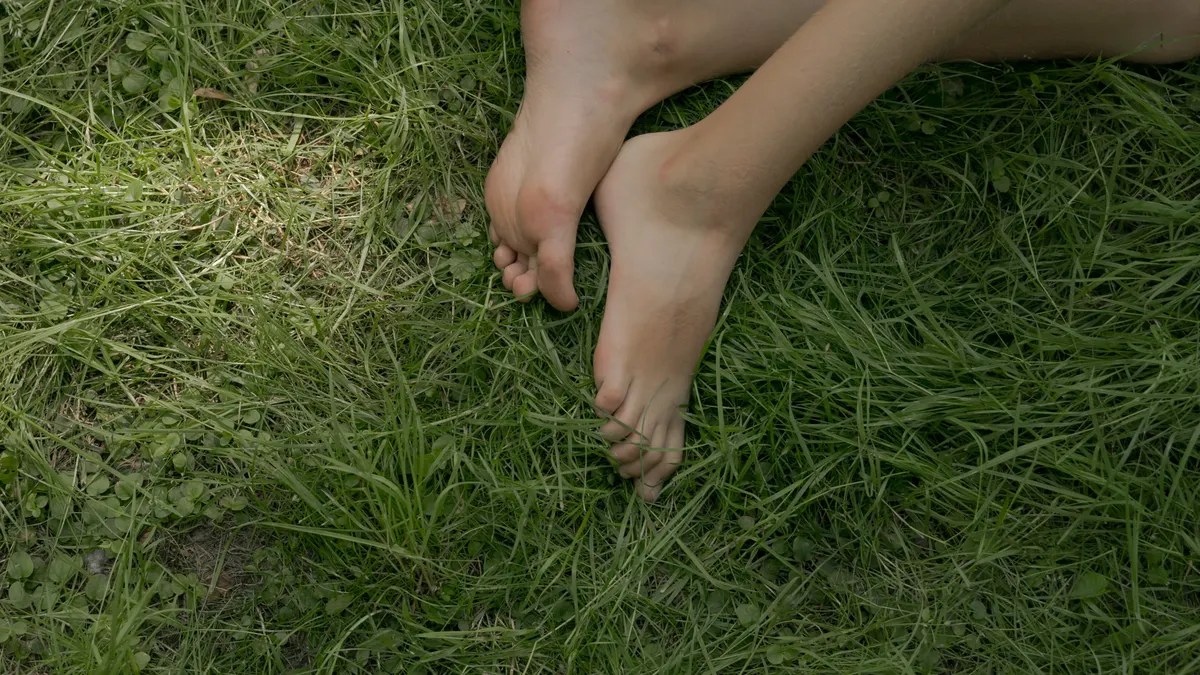
Grounding, also called earthing, is direct skin contact with the ground, such as standing barefoot on grass, or using a conductive mat linked to the earth. The same word also names a mental exercise that brings your attention back to the present.
Which kind of grounding are you looking for?
| Earthing | Grounding techniques | |
|---|---|---|
| What you do | Touch the ground, or a connected mat or sheet | Name what you sense around you |
| Goal people have | Sleep, comfort, well-being | Steady attention in a tense moment |
| Equipment | None outdoors | None |
How does earthing work?
Its proponents say the body takes up electrons from the Earth's surface through bare skin. A 2012 review by Chevalier and colleagues presents that idea and reports claims of better sleep and less pain, from walking barefoot or from sitting or sleeping on conductive systems.
The review describes modern life, with rubber soles and upper floors, as separating people from this contact, and suggests the gap may affect well-being. It reports changes in physiology and in how people feel, from barefoot walking outdoors to working or sleeping on conductive systems indoors.
What do studies on grounding show?
Early studies measured sleep, stress hormones and blood in small groups.
- Ghaly and Teplitz, 2004: 12 people with sleep, pain and stress complaints slept on a conductive pad for 8 weeks. Night-time cortisol went down and participants reported better sleep and less pain. It was a pilot study of this single group.
- Chevalier and colleagues, 2013: 10 healthy adults were grounded for 2 hours; red blood cells clumped less in a laboratory measure.
With 12 and 10 participants, these are first measurements. The simplest next step is to try the habit and note how you feel.
Here is how the 2 studies were run. In the sleep pilot, saliva was collected every 4 hours over a 24-hour period before the pads were used, then again at week 6, to draw each person's daily cortisol curve. Symptoms were reported every day, and the authors noted that changes were most apparent in women.
In the blood study, each adult sat in a reclining chair in a quiet, dimly lit room, with conductive patches on the soles and palms. Researchers then filmed red blood cells under a microscope to see how fast they moved in an electric field, and counted how many had clumped together.
What can you realistically expect from grounding?
A calm pause, fresh air and attention to your feet. People who keep the habit usually value the break itself: a few minutes without screens, slower breathing and a change of surface. Measure what you can: how rested you feel on waking, or how tense your shoulders are at the end of a day.
| Week | Try this | Write down |
|---|---|---|
| 1 | 10 minutes barefoot, 3 days | Mood before and after, from 1 to 10 |
| 2 | Same, at the same hour | Sleep quality each morning |
| 3 | Compare with days without it | Whether you want to keep it |
How do you try grounding at home?
Start with 10 to 20 minutes outside.
- Choose clean grass, sand or soil, free of glass and sharp stones.
- Take off shoes and socks. Stand, walk slowly or sit with your feet down.
- Notice temperature and texture; leave your phone in your pocket.
- Repeat daily if you enjoy it.
Indoors, grounding mats and sheets connect to an earthing point; follow the maker's instructions exactly, since the product links your body to the electrical system of the building. Grounding shoes use conductive soles for the same idea.
How do you choose a grounding mat or sheet?
Look for clear instructions, an intact cord and a stated way of connecting to earth.
- The surface must be conductive where your skin touches it.
- The cord connects to the earth point of an outlet or to a rod in the ground, as the maker specifies.
- The manual should say how to wash and test it.
- Unplug it during electrical storms and if the cord is damaged.
Conductive mats, bands and sheets are what the home studies used. The pilot on sleep had participants lie on a conductive mattress pad in their own beds for 8 weeks, while the blood study used patches on the soles and palms linked by wire to a rod outdoors.
What is the 5-4-3-2-1 grounding technique?
A short sensory countdown that pulls attention into the room. As described by University of Rochester Behavioral Health Partners, breathe slowly, then name:
- 5 things you can see
- 4 things you can touch
- 3 things you can hear
- 2 things you can smell
- 1 thing you can taste
It takes a couple of minutes and can be done anywhere, silently.
Which other grounding exercises can you try?
Pick one that uses a sense you can reach right now.
- Feet: press both soles into the floor and notice heel, arch and toes.
- Breath: breathe slowly and make the out-breath a little longer.
- Touch: hold an object and describe its weight, edges and temperature.
- Naming: say the date, the place and what you will do next.
The University of Rochester guide suggests starting with slow, deep breaths before the 5-4-3-2-1 countdown.
Is grounding safe?
Barefoot outdoors, the main risks are cuts, bites, burns on hot surfaces and weather. Never stand outside barefoot in a storm: the National Weather Service says that if you hear thunder, you are likely within striking distance and should go indoors. Open sores on the feet and soil contact are a poor mix. With indoor products, do not use a damaged cord or socket.
Can grounding fit into a wider routine?
Yes, as one simple habit among sleep, movement and meals. A naturopath can help you weave it into a week that also includes walks and screen breaks. Browse more alternative medicine practices, including fasting patterns.
Frequently asked questions
What is the difference between grounding and mindfulness?
The 5-4-3-2-1 exercise uses your senses to return to the present, a skill close to mindfulness. Earthing refers to physical contact with the ground.
How long should you ground for?
No standard dose exists. The published studies used anywhere from 2 hours in a session to nightly use for 8 weeks.
Can you ground while sitting?
Yes. Sit on a chair or bench with bare feet on grass, sand or soil, and stay as long as it is comfortable.
Sources
- Earthing: health implications of reconnecting the human body to the Earth's surface electrons, Journal of Environmental and Public Health (Chevalier et al.), 2012
- The biologic effects of grounding the human body during sleep, Journal of Alternative and Complementary Medicine (Ghaly, Teplitz), 2004
- Earthing (grounding) the human body reduces blood viscosity, Journal of Alternative and Complementary Medicine (Chevalier et al.), 2013
- 5-4-3-2-1 Coping Technique, University of Rochester Medicine, 2018
- Lightning Safety, National Weather Service