Iron-rich foods: 15 sources ranked
By the Naturomag editorial team · Published
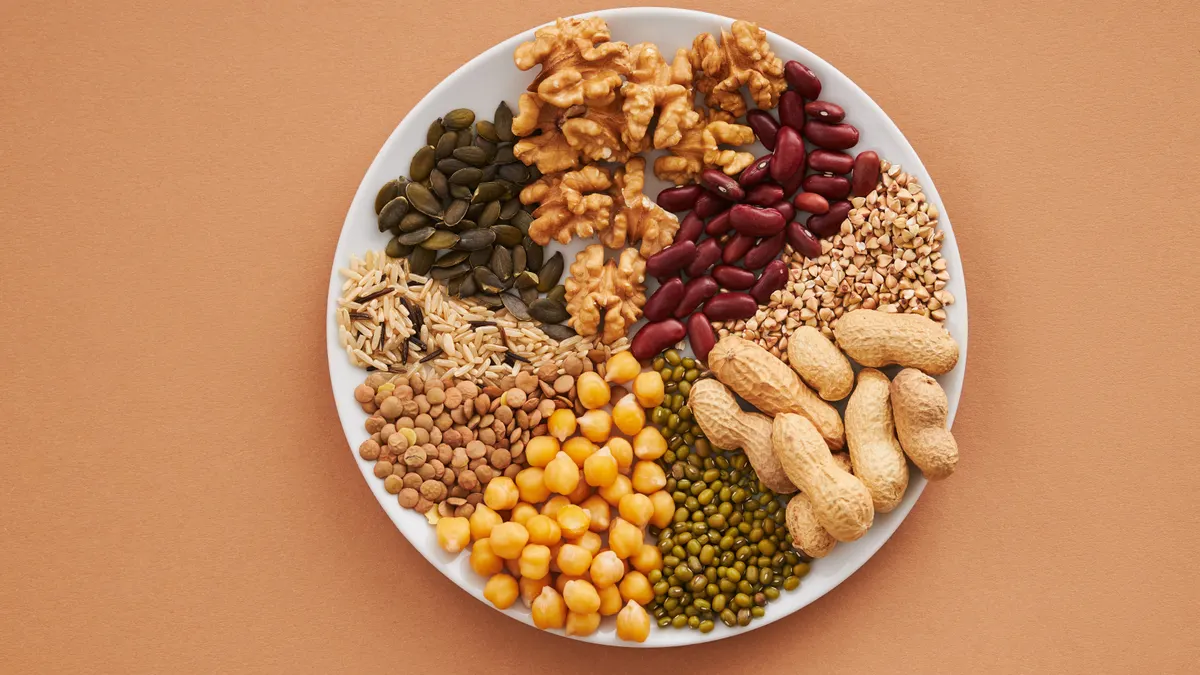
The most iron-rich foods in our ranking are pork liver (17.9 mg per 100 g), chicken liver (11.6 mg), oysters (9.2 mg) and pumpkin seed kernels (8.8 mg). Beans, lentils, tofu and spinach lead the everyday plant options, part of our guide to healing foods.
- US Daily Value
- 18 mg
- Men 19 and older (US)
- 8 mg a day
- Women 19 to 50 (US)
- 18 mg a day
- Pregnancy (US)
- 27 mg a day
- Best partner at the same meal
- Vitamin C
Which foods are highest in iron?
Organ meats and shellfish crowd the top, with pumpkin seeds, tofu and legumes close behind. We took each value from Health Canada's Canadian Nutrient File, then worked out the amount in a 3 oz (85 g) portion and the share of the FDA Daily Value of 18 mg supplied by 100 g.
| Food | Iron per 100 g (mg) | Iron per 3 oz (mg) | % Daily Value per 100 g |
|---|---|---|---|
| Pork liver, braised | 17.9 | 15.2 | 100% |
| Chicken liver, simmered | 11.6 | 9.9 | 65% |
| Eastern oysters, wild, boiled or steamed | 9.2 | 7.8 | 51% |
| Pumpkin and squash seed kernels, dried | 8.8 | 7.5 | 49% |
| Blue mussels, boiled or steamed | 6.7 | 5.7 | 37% |
| Beef liver, braised | 6.5 | 5.6 | 36% |
| Firm tofu set with calcium sulfate, raw | 5.4 | 4.6 | 30% |
| White beans, boiled | 3.7 | 3.1 | 21% |
| Spinach, boiled | 3.6 | 3.0 | 20% |
| Lentils, boiled | 3.3 | 2.8 | 19% |
| Dark red kidney beans, boiled | 2.9 | 2.5 | 16% |
| Chickpeas, boiled | 2.9 | 2.5 | 16% |
| Clams, boiled or steamed | 2.8 | 2.4 | 16% |
| Dried apricots | 2.7 | 2.3 | 15% |
| Lean ground beef, broiled | 2.6 | 2.2 | 14% |
Read the portion before the ranking. Few people eat 100 g of pumpkin seeds at once: a 1 oz handful brings about 2.5 mg. A bowl of beans easily passes 100 g.
MedlinePlus also names iron-fortified cereals among the best sources. Their iron content depends on the brand, so read the label.
How much iron do you need each day?
It depends on age, sex and the country whose reference you follow. The US figures below are the ones listed by MedlinePlus; the UK figures come from the NHS.
| Adult group | United States | United Kingdom |
|---|---|---|
| Men | 8 mg | 8.7 mg |
| Women from 19 to about 50 | 18 mg | 14.8 mg |
| Women past that age | 8 mg | 8.7 mg |
In the US, the recommendation rises to 27 mg during pregnancy and is 9 mg while breastfeeding from age 19. The NHS notes that women who still have periods after 50 may need the 14.8 mg amount.
Which iron-rich foods matter for babies and children?
Iron-fortified foods have a central place in the early years. These are the US daily amounts listed by MedlinePlus:
| Age | Iron per day |
|---|---|
| 7 months to 1 year | 11 mg |
| 1 to 3 years | 7 mg |
| 4 to 8 years | 10 mg |
- From about 6 months, babies need more iron than before; MedlinePlus says those who are not breastfed should get an iron supplement or iron-fortified formula.
- Between ages 1 and 4, it calls for iron-fortified foods or an iron supplement.
- Milk is a very poor source: toddlers who drink a lot of it and little else can run short.
What is the difference between heme and nonheme iron?
Heme iron comes from meat, fish and shellfish; nonheme iron comes from plants, and your body absorbs less of it. A 2010 review of iron bioavailability estimates absorption at 14 to 18% from mixed diets and 5 to 12% from vegetarian diets, in people with no iron stores. The same review notes that your own iron status weighs more than the makeup of the diet.
So a vegetarian plate has to count differently: more iron-rich plants across the day, and the right companions on the fork.
How can you absorb more iron from plant foods?
Put vitamin C on the same plate. The European register of health claims authorizes this wording: Vitamin C increases iron absorption. Citrus, strawberries, tomatoes and potatoes are sources MedlinePlus lists.
- Add some meat or fish to beans or dark greens: MedlinePlus reports up to 3 times more plant iron absorbed.
- Move black tea away from your main iron meal: it contains substances that bind dietary iron.
- Know the other brakes: phytates, polyphenols and calcium lower absorption in single-meal studies, with a more modest effect across a varied diet.
- Cook in cast iron: the pan can add iron to the food.
What does an iron-rich day without meat look like?
3 plant foods are enough to reach 11 mg. Our calculation from the table: 150 g of boiled lentils (5.0 mg) at lunch, 100 g of boiled spinach (3.6 mg) at dinner and 1 oz of pumpkin seed kernels (2.5 mg) as a snack add up to 11.1 mg. Finish lunch with strawberries for the vitamin C.
Swap lentils for white beans or add calcium-set tofu to climb further. Tofu labels matter: in the same database, a firm tofu prepared with magnesium chloride (nigari) has 1.8 mg per 100 g, against 5.4 mg for the calcium sulfate version in our table.
Why does iron matter for energy?
Iron contributes to the reduction of tiredness and fatigue. The EU register allows 2 statements for foods that are a source of iron: Iron contributes to normal formation of red blood cells and haemoglobin; Iron contributes to the reduction of tiredness and fatigue.
MedlinePlus lists low energy, shortness of breath, headache and dizziness among the symptoms of a low iron level, which over a long period can lead to iron deficiency anemia. Menstruating or pregnant women, frequent blood donors and long-distance runners are among the groups it names as more exposed.
Who should go easy on iron?
People with hemochromatosis absorb too much iron and follow a low-iron diet without iron supplements. That is the position described by MedlinePlus.
- The NHS reports that supplement doses above 20 mg can cause constipation, nausea, vomiting or stomach pain, while 17 mg or less a day is unlikely to cause harm.
- Very high doses can be fatal, particularly for children: keep iron tablets out of their reach.
- Liver is rich in iron, and the NHS says to avoid it during pregnancy.
Frequently asked questions
Is spinach really a good source of iron?
Yes, with 3.6 mg per 100 g boiled, about 20% of the US Daily Value. It is nonheme iron, so pair it with a food rich in vitamin C.
Is red meat the richest source?
No. Lean broiled ground beef has 2.6 mg per 100 g, less than lentils at 3.3 mg. Its advantage is the heme form.
Is cultured milk high in iron?
No: plain low-fat kefir, the drinkable cultured milk, has about 0.1 mg per 100 g.
Sources
- Canadian Nutrient File, Health Canada
- Iron in diet, MedlinePlus, U.S. National Library of Medicine
- Vitamins and minerals: iron, NHS
- Daily Value on the Nutrition and Supplement Facts Labels, U.S. Food and Drug Administration
- Iron bioavailability and dietary reference values, American Journal of Clinical Nutrition, 2010
- Commission Regulation (EU) No 432/2012, list of permitted health claims, EUR-Lex, 2012