Anti-inflammatory diet: food list and 1-day menu
By the Naturomag editorial team · Published
An anti-inflammatory diet fills the plate with vegetables, fruit, nuts, olive oil and fatty fish, and cuts back on sugary drinks, fried food, refined grains and processed meat. It is a way of eating rather than a fixed program, and you can compare it with other healing foods and diets.
- Base of the plate
- Vegetables and fruit
- Main fats
- Olive oil, nuts, fatty fish
- Limit
- Sugary drinks, fried food, processed meat
- Pattern with the clearest results
- Mediterranean diet
What can you eat on an anti-inflammatory diet?
Everyday whole foods, most of them already in a regular supermarket. The examples follow the Harvard Health list updated in 2026; the right-hand column is our suggestion for putting each family on the table.
| Food family | Examples | Easy way in |
|---|---|---|
| Leafy greens | Spinach, kale, collards | A handful in soup or eggs |
| Fruit | Strawberries, blueberries, cherries, oranges, apples | Frozen berries at breakfast |
| Tomatoes | Fresh or cooked | A sauce made in olive oil |
| Nuts | Almonds, walnuts | A small handful instead of chips |
| Oily fish | Salmon, mackerel, tuna, sardines | Canned sardines on whole-grain toast |
| Fat and drinks | Olive oil, coffee | Oil and lemon as the house dressing |
Which foods should you limit?
The same Harvard list links 5 groups to more inflammation. Replace the one you eat most often first.
- Refined carbohydrates such as white bread and pastries: switch to whole grains.
- French fries and other fried foods: roast instead.
- Sodas and other sugary drinks: water, coffee or unsweetened tea.
- Red meat and processed meat: fish, beans or lentils a few nights a week.
- Margarine, shortening and lard: olive oil.
What do trials actually measure?
Blood markers of inflammation, and the Mediterranean pattern moves them most. A meta-analysis of 22 randomized trials compared dietary patterns. On the Mediterranean diet, interleukin-6 was 1.07 pg/mL lower and interleukin-1 beta 0.46 pg/mL lower on average. C-reactive protein, a marker many blood panels report, was about 1 mg/L lower, with a confidence interval that reaches zero and large differences between trials.
The same analysis found no substantial effect on these markers for the DASH diet or for vegetarian and vegan diets.
Researchers also score whole diets. The Dietary Inflammatory Index rates 45 food components according to how published studies link each one to 6 inflammation markers. The lower the score, the less inflammatory the diet.
How is it different from the Mediterranean diet?
One is a goal, the other a regional way of eating that serves it well. If you want a single model to copy, take the Mediterranean one: it has the clearest results in the analysis above.
| Question | Anti-inflammatory diet | Mediterranean diet |
|---|---|---|
| Where does it come from? | Studies of inflammation markers | Traditional eating around the Mediterranean |
| What guides your choices? | Foods that raise or lower the markers | Vegetables, legumes, grains, olive oil, fish |
| How should you use it? | As your filter | As your menu |
What does 1 day of meals look like?
3 simple meals and 1 snack, built from the lists above.
- Breakfast: oats with blueberries and walnuts, coffee if you drink it.
- Lunch: lentil salad with tomatoes, spinach, olive oil and lemon, then an orange.
- Snack: an apple and a few almonds.
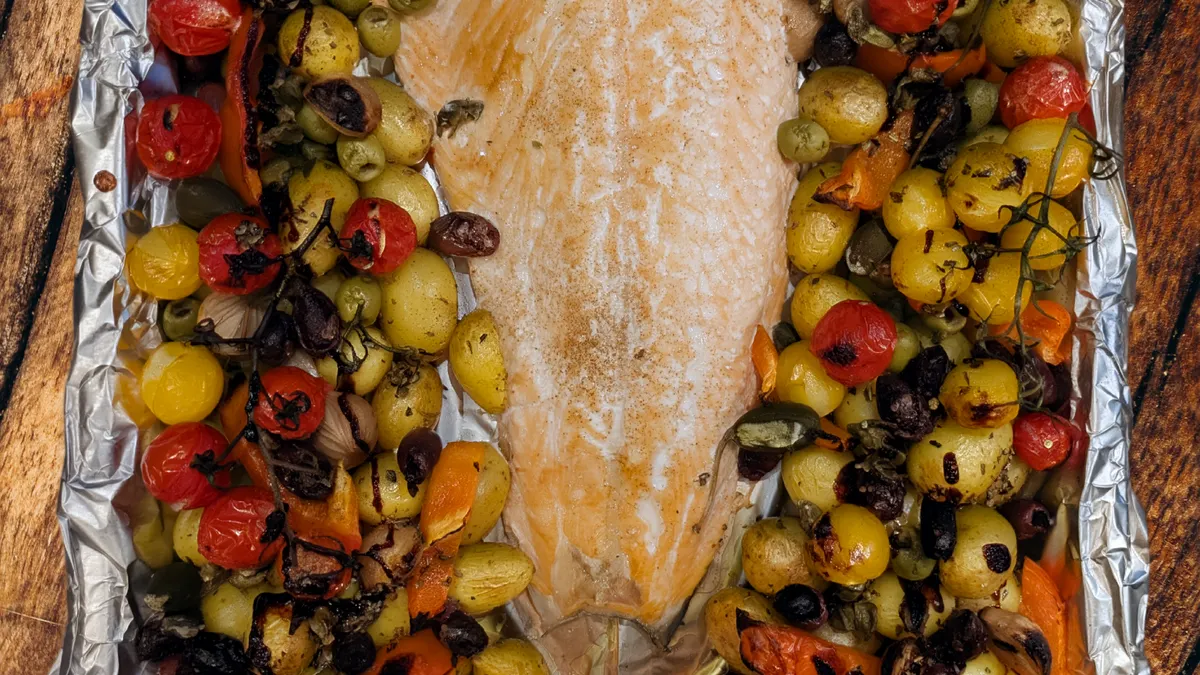
- Dinner: salmon baked on a tray with small potatoes, cherry tomatoes and olives.
The next day, keep the structure and swap the parts: sardines for salmon, chickpeas for lentils, kale for spinach. Lentils also count toward your iron, as our ranking of foods high in iron shows.
Which easy anti-inflammatory recipes should you start with?
2 recipes cover the lunch and dinner of the menu above.
Lentil and spinach salad, 1 bowl
- 1 cup cooked lentils, 1 chopped tomato, 1 handful of spinach, a few walnuts
- Dressing: 1 tablespoon olive oil and the juice of half a lemon
- Toss the lentils with the dressing first, then fold in the rest.
Sheet-pan salmon, 2 plates
- 2 salmon fillets, 2 handfuls of halved small potatoes, 1 cup cherry tomatoes, a few olives, olive oil, herbs
- Roast the potatoes at 400°F until they start to soften, add the rest, and roast until the salmon flakes easily with a fork.
Can you follow it during pregnancy?
The plant side fits well; the fish needs choosing. The FDA and EPA advice for people who are pregnant or breastfeeding is 8 to 12 ounces of seafood a week from choices lower in mercury, which means 2 to 3 servings of 4 ounces from the "Best Choices" list.
- Best Choices include salmon, trout, anchovy and Atlantic mackerel.
- Fish to avoid for mercury: king mackerel, marlin, orange roughy, shark, swordfish, Gulf of Mexico tilefish and bigeye tuna.
What should you watch if you take blood thinners?
Vitamin K. Green vegetables are among its main food sources, and MedlinePlus states that people on blood thinners need to watch how much vitamin K they get. Going from few greens to a large daily salad changes that intake sharply.
Frequently asked questions
Can it be vegetarian or vegan?
Yes: build it on vegetables, fruit, legumes, nuts and olive oil, and leave out the fish. In the meta-analysis above, vegetarian and vegan diets as tested showed no substantial effect on the blood markers, so keep the focus on which foods fill the plate.
Is coffee allowed?
Yes. Harvard Health counts coffee among the beneficial choices; the sugar and syrup added to it are another matter.
Do fermented foods belong in it?
They have a place: in a 10-week Stanford trial of 36 healthy adults, a diet rich in fermented foods was followed by lower levels of 19 inflammatory proteins. Our page on kefir covers the best-known fermented milk.
Do you need a supplement to follow it?
No. The patterns compared above are made of food, so start with the plate.
Sources
- Foods that fight inflammation, Harvard Health Publishing, 2026
- Effects of dietary patterns on biomarkers of inflammation and immune responses: meta-analysis of randomized trials, Advances in Nutrition, 2022
- Designing and developing a literature-derived, population-based dietary inflammatory index, Public Health Nutrition, 2014
- Advice about eating fish, U.S. Food and Drug Administration and EPA, 2021
- Vitamin K, MedlinePlus, U.S. National Library of Medicine
- Fermented-food diet increases microbiome diversity, decreases inflammatory proteins, Stanford Medicine, 2021