Oregano oil (oil of oregano): benefits, uses and side effects
By the Naturomag editorial team · Published
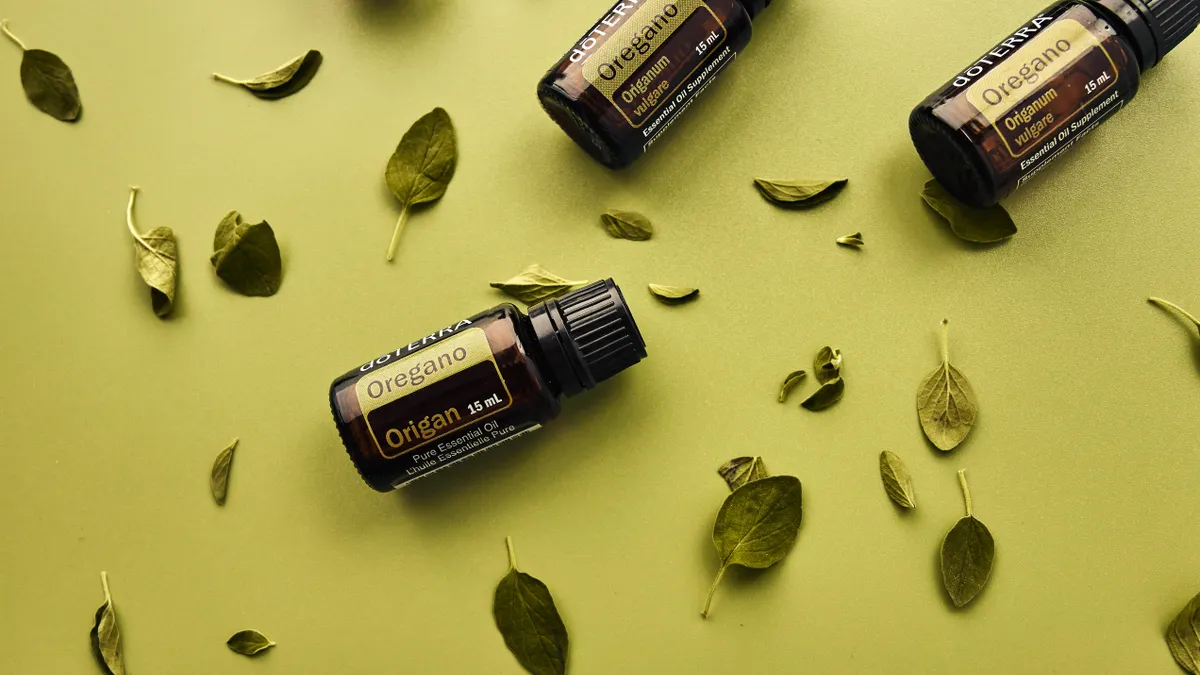
Oregano oil is the concentrated aromatic oil of oregano (Origanum species), rich in carvacrol and thymol, and its best-documented benefit is antimicrobial activity in laboratory tests. Below: what has been measured, how much carvacrol different oreganos really carry, how people take it and what it irritates.
- Plant
- Origanum species, often Origanum vulgare (mint family)
- Key compounds
- carvacrol, thymol; shares vary widely by species and origin
- Sold as
- essential oil, diluted drops, softgels or capsules ("oil of oregano")
- Strongest evidence
- lab studies; 1 small human study on gut parasites
- U.S. food status
- Origanum extracts listed as safe for flavoring (21 CFR 182.20)
What is oil of oregano?
It is an extract that concentrates the aromatic compounds of the oregano plant. The name covers very different products. The essential oil is the distilled concentrate, far stronger than the herb. A kitchen oregano oil is leaves steeped in olive oil, a food with a mild flavor. Supplement "oil of oregano" is usually the essential oil already blended with a carrier oil, in drops or softgels.
Chemistry depends on the plant. Carvacrol or thymol often dominates, but the mix changes with species, soil, harvest season and place (Molecules, 2017).
What are the benefits of oregano oil?
The research points to antimicrobial and antioxidant activity, mostly shown in test tubes and animals. The Molecules review collects findings on bacteria, fungi and viruses in laboratory conditions, plus antioxidant effects. A result in a dish shows what the compounds do to cells and microbes under test conditions, at concentrations set by the laboratory.
| Claimed benefit | What exists | How to read it |
|---|---|---|
| Fights microbes | laboratory studies | activity in a dish is not an effect in a person |
| Antioxidant | laboratory assays | chemical measures, not a health outcome |
| Gut parasites | 1 small study in 14 adults | early signal, details below |
| Hair, weight, immunity | sellers' claims | ask the brand for a study in people on its own product |
Has oregano oil been tested in people?
Yes, in a small way: a 2000 study gave 14 adults 600 mg of emulsified oil of oregano a day for 6 weeks. All had enteric parasites on stool tests, including Blastocystis hominis. Afterwards, Blastocystis hominis no longer appeared in 8 cases and fell in 3 more, and 7 of the 11 people who carried it reported fewer digestive symptoms. The published summary mentions 14 people and no comparison group. The product was an emulsified supplement, not a bottle of essential oil dropped into water.
What is the difference between oregano essential oil, oil of oregano and infused oil?
They are 3 different products with 3 very different strengths.
| Name on the label | What is in the bottle | Typical use |
|---|---|---|
| Oregano essential oil | the distilled aromatic concentrate | diluted on skin, or in blends |
| Oil of oregano (supplement) | usually essential oil in a carrier oil, sometimes emulsified, in drops or softgels | taken by mouth following the label |
| Oregano infused oil | dried or fresh leaves steeped in a cooking oil | food |
Wild oregano, Mediterranean oregano and Greek oregano are selling names as much as botany. The Latin name and the compound figures say more than the adjective on the front. If a label shows neither, you cannot tell which plant you are paying for.
How much carvacrol does oregano oil contain?
Anything from none to more than 90%, depending on the plant and where it grew. Carvacrol and thymol are the phenols that give oregano its sharp, hot smell and much of the activity measured in the lab. These are samples collected in the 2017 Molecules review:
| Oregano sample | Carvacrol | Other main compound |
|---|---|---|
| O. vulgare ssp. hirtum, Greece | 56 to 91% across studies | p-cymene |
| O. onites, Greece | 63 to 93% across studies | gamma-terpinene |
| O. vulgare, Greece | 63% | thymol (15%) |
| O. vulgare ssp. vulgare, Italy | 14.3% | spathulenol |
| O. vulgare, China (1 of the samples) | not among the main compounds | beta-citronellol (85%) |
So 2 bottles both labeled oregano can differ completely: chemists call these profiles chemotypes. A higher carvacrol figure means a stronger, more irritating oil, which calls for more dilution.
What about oregano oil with black seed oil?
Blends combine 2 oils in 1 capsule, so read each amount separately. The human study cited here tested emulsified oil of oregano on its own, so its figures do not carry over to a blend. If the label only gives a "proprietary blend" total, you cannot know how much oregano oil you take per capsule. Choose single-ingredient capsules when you want to know exactly what is in each dose.
How should you store oregano oil?
Tightly closed, away from heat and light, and out of reach of children and pets.
- Keep the dark glass bottle upright with its dropper cap closed right after use.
- Write the opening date on the label.
- Store capsules in their original container, with the lot number.
- Never decant essential oil into a food or drink bottle: a child could mistake it.
How do people use oregano oil?
On the skin it is diluted in a carrier oil; by mouth it comes in capsules or pre-diluted drops that follow the maker's label.
On skin
Never apply the pure essential oil. Poison Control advises dilution and keeping essential oils off broken skin. Test a small amount of your diluted mix first, and wash it off at the first sign of redness.
By mouth
The U.S. food listing of Origanum oils covers flavoring use (21 CFR 182.20), not supplement amounts. Capsules sold as dietary supplements are not approved by the FDA before they reach the shelf (NCCIH). Pure essential oil dropped into water floats on top and can irritate the mouth and throat.
In the air
Phenol-rich oils are a harsh choice to breathe. If you want scent in a room, see how to choose a gentler diffuser setup.
For hair and scalp
Shampoo and serum makers add oregano for its scent and reputation. For flaking, the oil with a controlled trial behind it is a different one: see what the tea tree dandruff trial found.
Is oregano oil different for women and men?
The human study above set 1 daily amount for its adult participants and gave no separate figure by sex. Claims that oregano oil "balances hormones" or works specially for men or women rest on marketing rather than on that research. Compare products on their content instead of the label's target audience.
What are the side effects of oregano oil?
Irritation is the main one, because carvacrol and thymol are potent compounds.
- Skin: undiluted oil can sting or cause a rash. Plant extracts can be irritating or allergenic (U.S. cosmetics guidance).
- Mouth and stomach: concentrated drops can burn.
- Medicines: essential oils may interact with them (Poison Control).
- Children: they are more susceptible to essential oil poisoning; bottles belong out of reach.
- Lungs: oil drawn into the airway while choking can cause pneumonia.
How do you pick good oregano oil capsules or drops?
Read the supplement facts for the species, the carvacrol share and the amount of oil per serving.
- Latin name printed in full, such as Origanum vulgare.
- Carvacrol or total phenol percentage, stated as a number.
- Milligrams of oregano oil per capsule or drop, separate from the carrier oil.
- Enteric-coated or emulsified, if you want to know how it releases.
- A lot number and an expiry date. Skip any product that makes disease claims.
Where can you buy oregano oil, and what should you compare?
Pharmacies, health food stores and online shops sell it; the label matters more than the shelf. Searching "oregano oil near me" brings up drops, softgels and pure essential oil side by side, so decide on the form first:
- Softgels or capsules: no taste or burn in the mouth; compare milligrams of oregano oil per capsule.
- Pre-diluted drops: compare the share of oregano oil to carrier oil.
- Pure essential oil: for blending at a low strength, never for swallowing straight from the bottle.
Then divide the price by the total amount of oregano oil in the bottle. That single figure puts a small concentrated product and a large diluted one on the same scale.
Where can you learn to use essential oils properly?
Aromatherapy courses teach oil chemistry, dilution and safety, the 3 things a strong oil like oregano calls for. Compare aromatherapy programs and their hours, or start with the basics of essential oils. The form on this page sends you program details.
Frequently asked questions
Is oregano essential oil the same as oil of oregano?
Not necessarily. Supplement "oil of oregano" is often the essential oil already diluted in a carrier oil. Check the label for the proportion.
Can I put oregano oil directly on my skin?
No, not undiluted: the concentrate can irritate or burn. Dilute it in a carrier oil and try a small area first.
How do I compare 2 oregano oil capsules?
Put the 2 supplement facts side by side. Check the species, the milligrams of oregano oil per capsule, the carvacrol percentage and the number of capsules per serving. Then compare the price for the same amount of oil, not the price per bottle. A cheaper bottle with half the oil per capsule is not a bargain.
Does cooking oregano give the same effect?
A pinch of dried oregano seasons food. An essential oil is a distilled concentrate, so the 2 are not comparable.
Sources
- Essential Oils of Oregano: Biological Activity beyond Their Antimicrobial Properties (Leyva-López et al.), Molecules, 2017
- Inhibition of enteric parasites by emulsified oil of oregano in vivo (Force et al.), Phytotherapy Research, 2000
- 21 CFR 182.20, essential oils, oleoresins and natural extractives generally recognized as safe, U.S. Government Publishing Office, 2024
- Essential oils: poisonous when misused, Poison Control (National Capital Poison Center)
- Aromatherapy, U.S. Food and Drug Administration, 2023
- Tea Tree Oil, National Center for Complementary and Integrative Health (NCCIH)