Omega 3 benefits for women and men
By the Naturomag editorial team · Published
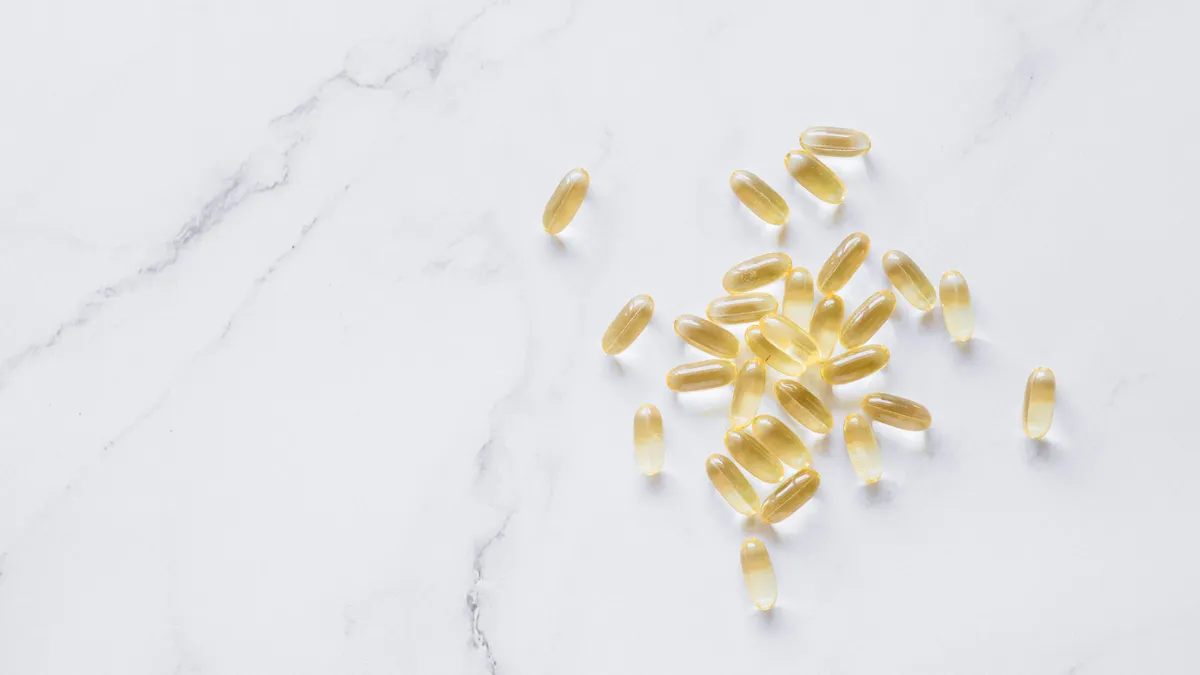
Omega 3 benefits for women and men start with the same 3 accepted functions: EPA and DHA contribute to the normal function of the heart, and DHA to the maintenance of normal brain function and normal vision, from 250 mg a day. The differences between the sexes lie in how the body makes and stores these fats, and in the life stages.
What are EPA, DHA and ALA?
They are the 3 omega 3 fats you will see on a label. EPA and DHA come from seafood, especially salmon, mackerel and tuna, and from fish, krill and algal oils. ALA comes from flaxseed, walnuts, chia, canola and soybean oil (NCCIH).
Which benefits are accepted for both sexes?
Each statement comes with its daily amount.
| Statement on the EU register | Daily intake required |
|---|---|
| EPA and DHA contribute to the normal function of the heart | 250 mg of EPA and DHA |
| DHA contributes to maintenance of normal brain function | 250 mg of DHA |
| DHA contributes to the maintenance of normal vision | 250 mg of DHA |
Which statements need higher amounts?
Blood pressure and triglycerides are tied to grams, not milligrams.
| Statement on the EU list | Daily amount |
|---|---|
| DHA and EPA contribute to the maintenance of normal blood pressure | 3 g of EPA and DHA |
| DHA and EPA contribute to the maintenance of normal blood triglyceride levels | 2 g of EPA and DHA |
For supplements carrying these statements, the same text asks labels to say not to exceed 5 g of EPA and DHA a day from supplements. Read the EPA and DHA lines on your product before counting.
Do women and men process omega 3 differently?
Yes, in conversion and in blood levels. A 2011 review of sex differences reports that labeled isotope studies show women convert a considerably higher share of plant ALA into long-chain omega 3 than men. Women also tend to have more DHA in blood lipids, though not in every study, and in a European sample of over 3,000 people sex explained only about 2% of the variation in DHA.
In practice: a man who relies on flaxseed alone gets less EPA and DHA out of it, so seafood or algal oil does more of the work for him.
How big is the conversion gap between women and men?
In small isotope studies, young women made far more EPA and DHA from plant ALA than young men. The Linus Pauling Institute reports these shares:
| Share of dietary ALA converted | Healthy young men | Healthy young women |
|---|---|---|
| To EPA | about 8% | about 21% |
| To DHA | 0% to 4% | about 9% |
The institute ties the gap to estrogen. Genes matter too: common variants of the enzymes involved may explain up to 30% of the differences in blood levels of these fats from one person to another.
Which fish give the most EPA and DHA?
Herring, chinook salmon and sardines lead the list. Amounts per 3 ounce serving, about the size of a deck of cards:
| Seafood | EPA | DHA |
|---|---|---|
| Pacific herring | 1.06 g | 0.75 g |
| Chinook salmon | 0.86 g | 0.62 g |
| Pacific sardines | 0.45 g | 0.74 g |
| Atlantic salmon | 0.28 g | 0.95 g |
| Pacific oysters | 0.75 g | 0.43 g |
| Rainbow trout | 0.40 g | 0.44 g |
| Canned white tuna | 0.20 g | 0.54 g |
| Canned light tuna | 0.04 g | 0.19 g |
One serving of Atlantic salmon holds more than 1 g of EPA and DHA together. To average the 250 mg of DHA a day behind the brain and vision statements, which is 1.75 g a week, eat 2 such servings.
Which plant foods supply ALA?
Flaxseed oil, chia and walnuts are the richest.
- Flaxseed oil, 1 tablespoon: 7.3 g.
- Dried chia seeds, 1 ounce: 5.1 g.
- English walnuts, 1 ounce: 2.6 g.
- Ground flaxseeds, 1 tablespoon: 1.6 g.
- Canola oil, 1 tablespoon: 1.3 g.
- Soybean oil, 1 tablespoon: 0.9 g.
ALA has its own accepted statement: ALA contributes to the maintenance of normal blood cholesterol levels, with 2 g a day. A tablespoon of flaxseed oil or an ounce of walnuts covers it.
What matters for women, especially in pregnancy?
Seafood comes first. US guidance asks women who are pregnant or breastfeeding to eat 8 to 12 ounces of seafood a week, from fish lower in mercury (FDA advice about eating fish). The 7 to leave out for their mercury are king mackerel, marlin, orange roughy, shark, swordfish, tilefish from the Gulf of Mexico and bigeye tuna.
On supplements, a 2018 review of 70 studies with 19,927 pregnant women, summarized by NCCIH, found fewer preterm births among those who took long-chain omega 3. Other reviews reported smaller or no effects on newborn outcomes.
Does omega 3 ease period pain?
Pooled studies point that way, with study quality as the main limit. A 2024 systematic review and meta-analysis gathered 12 studies in 881 women with painful periods, who took 300 to 1,800 mg of long-chain omega 3 a day for 2 or 3 months. The pooled result of 8 studies showed less pain, and most studies that tracked painkiller use saw it fall. Side effects were few and mild. The authors rated most of the research as neutral in quality.
What about omega 3 for men?
Heart, brain and vision functions apply to him as to anyone; fertility data are early. A study of 1,679 young Danish men (2020) found that those taking fish oil for 60 days or more had a semen volume 0.64 mL higher and larger testicular size than non-users. It was a snapshot, not a trial, with only 98 supplement users, and capsule content was not checked.
What does research show on mood, memory and dry eyes?
Mostly open questions for supplements, according to NCCIH.
- Mood: a 2021 review of 35 studies in 1,964 people found that any effect on depression may be too small to matter, on low quality evidence.
- Memory: a 2022 review of 33 studies suggests food and supplement omega 3 may help protect healthy people against cognitive decline.
- Dry eyes: a 2022 review of 8 studies suggested symptoms may improve, while a year-long trial with 535 participants found the capsules no more helpful than placebo.
- Heart: a 2020 review of 86 studies with 162,796 people found that more EPA and DHA slightly reduced coronary events and coronary death.
How much should you get, and from where?
2 servings of oily fish a week is the simplest route. The American Heart Association advises at least 2 servings of 3.5 ounces each of omega 3 rich fish such as salmon, mackerel, trout or sardines (MedlinePlus). If you do not eat fish, algal oil is a vegetarian source of DHA, and some also carries EPA.
On a capsule, read the EPA and DHA lines, not the "fish oil 1,000 mg" headline: the oil also holds other fats.
How do you take an omega 3 supplement well?
- Swallow it with a meal: omega 3 supplements are absorbed better that way.
- Split a larger daily amount into 2 or 3 smaller ones to limit stomach upset.
- Compare forms by their EPA and DHA content: in natural fish oil, up to 70% of the fatty acids can be other types, while ethyl ester concentrates hold more per gram.
- Krill oil is considered comparable to fish oil as a source of EPA and DHA.
What side effects do omega 3 supplements have?
Usually mild ones. NCCIH lists unpleasant taste, bad breath, bad-smelling sweat, headache, heartburn, nausea and diarrhea. Fish liver oils such as cod liver oil add vitamins A and D, which can be harmful in excess, so count them with your other products.
Same method for other nutrients in the supplement guides: see D3 against D2 and probiotic and prebiotic basics.
Do high doses affect heart rhythm or bleeding?
Dose is the point to watch. A 2021 meta-analysis in Circulation of 7 large heart trials with 81,210 people (mean age 65) linked marine omega 3 supplements with more atrial fibrillation, an irregular heartbeat. The relative risk rose by 12% in trials using 1 g a day or less and by 49% above 1 g.
On bleeding, EPA and DHA can lengthen bleeding time. The Linus Pauling Institute judges that intakes under 3 g a day are unlikely to cause clinically significant bleeding, and advises caution for people already prone to bleed.
Frequently asked questions
Is fish oil or algal oil better?
Compare the milligrams of EPA and DHA per serving. Fish oil supplies both; algal oil is a vegetarian source of DHA, and some also carries EPA.
Do walnuts count?
They bring ALA, a different omega 3. The body turns only part of it into EPA and DHA, a bigger part in women than in men.
Sources
- Omega-3 Supplements: What You Need To Know, NCCIH
- Decsi and Kennedy, Sex-specific differences in essential fatty acid metabolism, American Journal of Clinical Nutrition, 2011
- Advice about Eating Fish, US Food and Drug Administration
- Jensen et al., Associations of fish oil supplement use with testicular function in young men, JAMA Network Open, 2020
- Omega-3 fats: good for your heart, MedlinePlus, National Library of Medicine
- Commission Regulation (EU) No 432/2012, European Union, EUR-Lex, 2012
- Essential fatty acids, Micronutrient Information Center, Linus Pauling Institute, Oregon State University
- Omega-3 long chain fatty acids for reducing dysmenorrhoea pain, meta-analysis, Nutrition and Dietetics, 2024
- Long-term marine omega-3 supplementation and risk of atrial fibrillation, meta-analysis, Circulation, 2021
- Regulation (EU) No 432/2012, annex of permitted health claims, legislation.gov.uk, 2012