Reiki practitioner: what the role is and how to become one
By the Naturomag editorial team · Published
A reiki practitioner places their hands lightly on or just above a person, in a session built on an Eastern idea of life energy. You become one by training with a Reiki master. Get the courses that fit you, free.
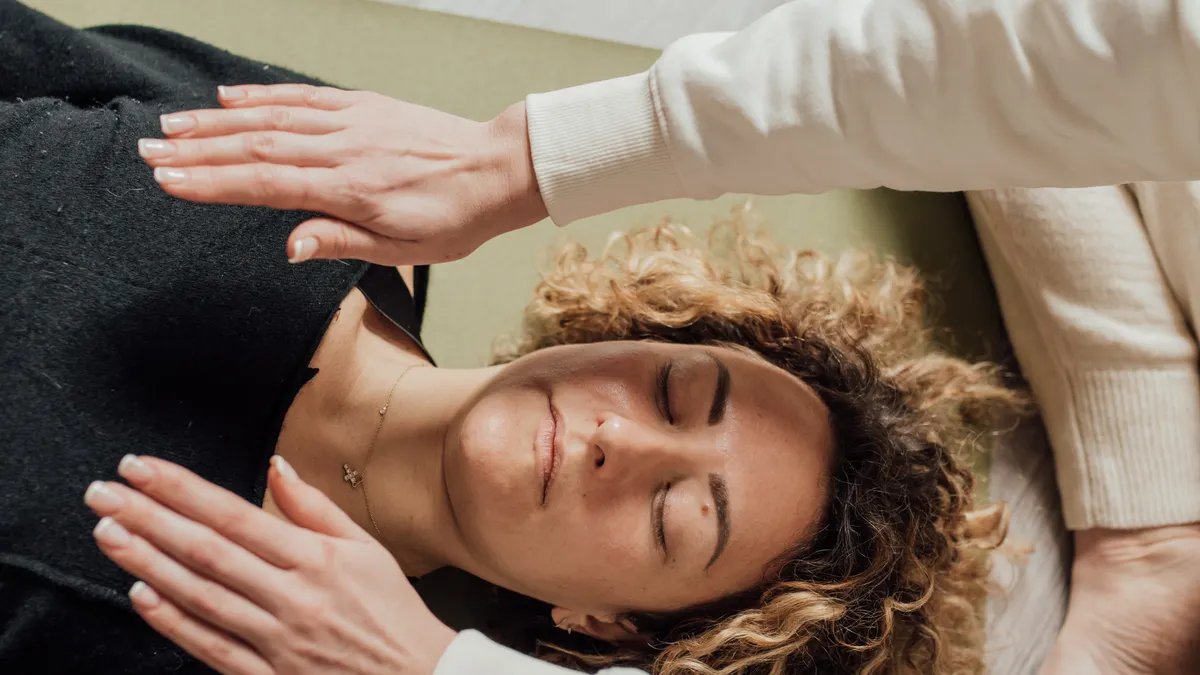
- Session
- Hands lightly on or just above the person
- Training
- Levels with a Reiki master, then practice
- UK standard
- At least 9 months of practice and 240 hours of study
- US license
- No standardized national credential for complementary practitioners
How we compare : role as described by the US National Center for Complementary and Integrative Health; training standards from the UK Reiki Council and CNHC; job information from the UK National Careers Service ().
What does a reiki practitioner do in a session?
They hold their hands on or just above the body, following a sequence of positions. The NCCIH describes Reiki as an approach based on an Eastern idea of life energy. You will see them called Reiki practitioners, Reiki healers or Reiki therapists.
How do you become a Reiki healer?
Learn with a teacher, practise, then document your practice. The UK National Careers Service describes 2 routes: an introductory course at a college or community centre followed by further training, or attunements with a Reiki master. No set entry requirement applies, and reaching full master and teacher level can take up to 3 years.
- Receive Reiki sessions yourself to know the practice from the table.
- Take your first levels and the attunements that go with them.
- Practise on volunteers and keep notes.
- Choose a register or association and meet its standard.
Compare class levels and prices on our page about Reiki certification courses.
What does Reiki training cover at each level?
Level 1 turns toward yourself, level 2 toward clients, the master level toward students. The UK Reiki Federation expects Level 1 to cover the history and principles, self-treatment, hand positions for seated and full treatments, situations calling for caution and codes of ethics. Level 2 adds the symbols, distant healing, healing and the law and further case studies, and is seen as the basic level for professional practice.
As a price benchmark in the United States, the International Center for Reiki Training lists $545 for its combined Reiki I and II weekend and $1,375 for its 3-day master class, which includes how to teach and how to develop a Reiki business.
What does the UK ask of professional reiki practitioners?
A defined standard, even though registration is a choice. The UK Reiki Council asks for:
- at least 9 months of Reiki practice after your first attunement;
- 240 hours of study, including 65 hours of in-person training, at least 40 of them taught with teacher and learner in the same room;
- 75 documented sessions given to others and 100 hours of Reiki received;
- 10 case studies of at least 4 sessions each, and an observed session.
The Complementary and Natural Healthcare Council keeps a register that Reiki practitioners can join with training meeting the National Occupational Standards, plus indemnity insurance and a code of conduct. Courses delivered only by distance learning do not meet its requirements.
Which qualities and checks does the job ask for?
Listening matters as much as hand positions. The National Careers Service lists sensitivity and understanding, clear spoken communication, active listening, customer service, knowledge of biology, patience, attention to detail and the ability to work well with your hands. Experience in anatomy, physiology, another complementary therapy or a caring profession can help.
Plan the professional basics too. Applying to the CNHC register calls for current professional indemnity insurance, acceptance of its code of conduct and its continuing professional development policy, and the register charges an annual fee. The UK Reiki Council standard adds record keeping, consent, confidentiality and business finance to the skills a practitioner should have.
Which organizations can a practitioner join?
In the UK, registration and membership are 2 separate steps.
- CNHC: keeps a voluntary register that includes Reiki.
- UK Reiki Federation: a Reiki-only professional organization, approved by the CNHC to verify Reiki practitioners who apply for registration. It also keeps a directory of accredited courses.
- General Regulatory Council for Complementary Therapies: another body the National Careers Service names for applications.
- Reiki Council: publishes the practitioner specification described above.
Accredited courses follow the Core Curriculum for Reiki, in its November 2023 version, and are independently assessed. Choosing one from the start spares you from filling gaps later.
Do you need a license to practise Reiki in the United States?
The NCCIH states that there is no standardized national system for credentialing complementary health practitioners, so each state sets its own rules. Look up your state before you charge for sessions, and ask any school which certificate you receive and who issues it. Many practitioners add Reiki to another trade: SWIHA in Arizona offers Reiki as an optional certificate in its massage program.
How do reiki practitioners work and earn?
Mostly for themselves. The National Careers Service describes Reiki healers as often self-employed, managing their own hours, with a typical week of 37 to 39 hours and variable pay. Income then depends on your rate, your rent and how steadily you fill your week, so plan your first clients before your first course ends.
Studying from home first? Read what online Reiki courses can and cannot count for.
Frequently asked questions
What is the difference between a Reiki healer and a Reiki master?
A master has taken the master level and can pass attunements to students; a healer or practitioner gives sessions.
How long does it take to become a reiki practitioner?
A first weekend class gets you started. The UK Reiki Council's professional standard asks for at least 9 months.
Can I combine Reiki with massage?
Yes: some schools offer Reiki inside massage programs or as continuing education for licensed therapists.
What should a Reiki certificate show?
The UK Reiki Federation asks for the level, the style, the name of the teacher and the date of training, with the lineage provided.
Sources
- Reiki, National Center for Complementary and Integrative Health, 2018
- Credentialing, licensing and education, NCCIH, 2018
- Reiki healer job profile, UK National Careers Service, 2026
- Practitioner specification, UK Reiki Council, 2026
- Am I eligible to apply?, CNHC, 2026
- Arizona massage school, SWIHA, 2026
- Choosing a course, UK Reiki Federation, 2026
- Holy Fire III Reiki class descriptions, ICRT, 2026
- UK Reiki Federation: membership and CNHC verification, UK Reiki Federation, 2026