Juice cleanse: how to plan 1, 3 or 5 days
By the Naturomag editorial team · Published
A juice cleanse is a short period, often 1 to 5 days, in which fruit and vegetable juices replace some or all meals. You can expect lower calorie intake and a quick drop on the scale that tends to reverse when normal meals return, so pick the shortest format that gives you the reset you want.
- What it is
- Juices in place of some or all meals
- Common length
- 1, 3 or 5 days
- Weight effect measured
- Short-term loss from low calories, regain tends to follow
- Where to start
- 1 day, or juices alongside meals
How long should a juice cleanse last?
Choose 1 day if this is your first, and keep solid food in any plan longer than that. This kind of plan sits within the wider family of body cleanse programs.
| Plan | What a day looks like | Who it suits |
|---|---|---|
| 1 day | Juices between simple meals, or juices instead of 1 meal | First try, busy schedule |
| 3 day juice cleanse | Vegetable-forward juices plus 1 solid meal each day | You want a clear break from snacks and drinks |
| 5 days | 1 juice a day added to full meals | You want to build a habit, not to restrict |
What goes into a good cleanse juice?
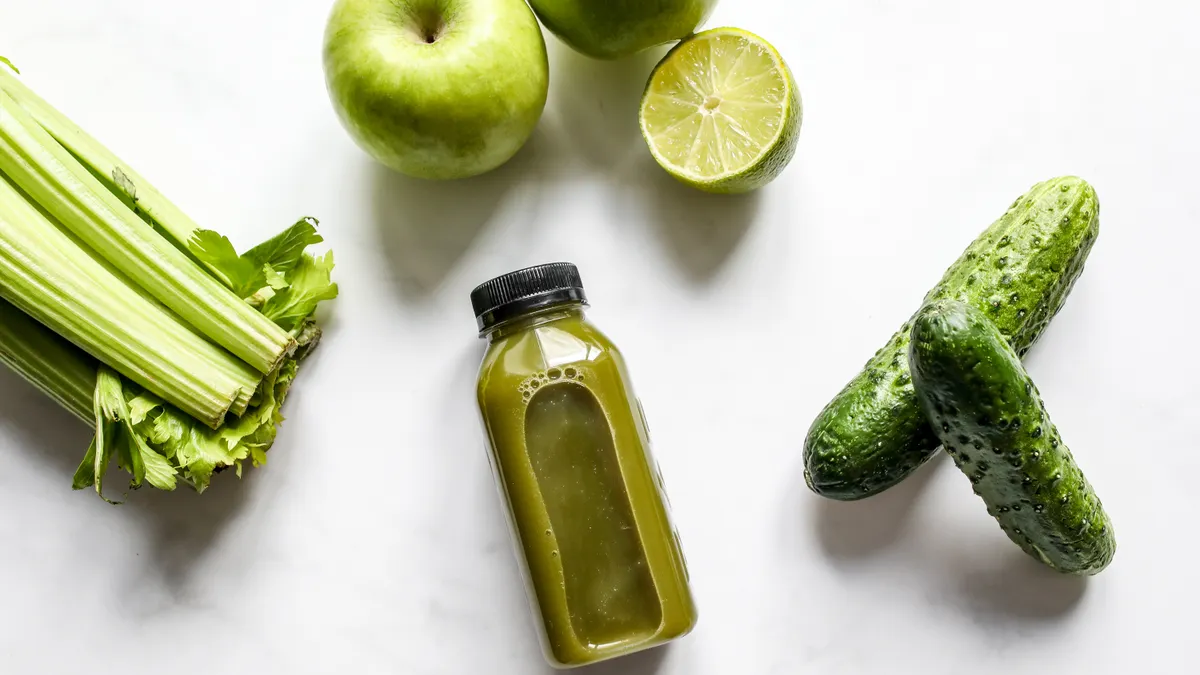
Mostly vegetables, with a little fruit for taste. A green juice built on cucumber, celery, green apple and lime is a simple base.
- Water-rich vegetables: cucumber, celery.
- Fruit for flavor: 1 apple or a handful of berries per bottle.
- Sharpness: lime, lemon or ginger.
- Leafy greens and beets: use in moderation, since they are high in oxalates.
The NIDDK names spinach and rhubarb among high-oxalate foods, and NCCIH says people prone to kidney stones should limit juices made from high-oxalate produce.
Which juice recipes work for a cleanse?
These 3 simple blends cover a whole day without repeating the same taste. Quantities make roughly 1 glass each and are a kitchen starting point, so adjust them to your juicer and your appetite.
| Blend | Ingredients | When it fits |
|---|---|---|
| Green | 1 cucumber, 2 celery stalks, 1 green apple, half a lime | Morning |
| Orange | 3 carrots, 1 apple, a small piece of ginger | Afternoon |
| Citrus | 2 oranges, half a lemon, half a cucumber | In place of a sugary drink |
Make each juice close to the moment you drink it and keep any extra in the refrigerator. Rinse every item under running water before cutting, even the ones you will peel.
Homemade or bottled juice: which is better?
Homemade gives you control of the recipe; bottled saves time, as long as you check how it was treated.
| Homemade | Store or delivery | |
|---|---|---|
| Recipe | You decide the vegetable share | Read the ingredient list |
| Food safety | Wash hands and produce, cut away damaged parts | Look for pasteurized, or the warning label |
| Effort | Juicer, shopping, cleaning | Ready to drink |
The FDA says untreated juice can carry bacteria. Untreated juice sold in stores must carry a label saying it has not been pasteurized, but juice sold by the glass, at a juice bar for example, does not need it. At home: wash hands for at least 20 seconds, rinse all produce before cutting, scrub firm items with a clean brush, and use no soap on produce.
What does a sample 3 day juice cleanse look like?
A juice cleanse diet you can finish: 3 juices spread across the day, with 1 real meal so you keep protein and fiber.
- Morning: a green juice (cucumber, celery, apple, lime) and a glass of water.
- Midday: your solid meal, such as cooked vegetables, beans or eggs, and a whole grain.
- Afternoon: a carrot, apple and ginger juice.
- Evening: a bowl of vegetable soup or a second light meal.
Keep water going through the day. On day 4, go back to regular meals and carry over the habit you liked most, such as the vegetable-based drink in the afternoon.
How do you prepare for a juice cleanse?
Decide the length, shop once and lower the extras a few days before. Preparation decides whether you finish.
- 3 days before: cut back on alcohol and sugary drinks, so the first day feels less abrupt.
- The day before: wash produce, plan your solid meal and put snacks out of sight.
- Each morning: set a time for each juice and for lunch, so hunger does not pick the schedule.
- Your calendar: pick days without long workouts, long drives or heavy work.
Stop the plan and eat normally if you feel faint or unwell: a juice program is something you choose, and a meal ends it at any time.
Will a juice cleanse help you lose weight?
You may weigh less for a few days, because you are eating far fewer calories. A 2017 review in Current Gastroenterology Reports found that juicing and detox diets lead to weight loss through very low calorie intake for short periods, with weight tending to return when normal eating resumes. A 2015 review found no randomized controlled trial of commercial detox diets in humans. NCCIH reports that no study has examined the long-term effects of these programs.
What should you eat after a juice cleanse?
Ordinary meals with vegetables, protein and whole grains, brought back at once. Because weight lost on very low calories tends to return, the gain you keep is the habit, not the number on the scale.
Pick 2 changes from your cleanse and run them for 4 weeks, for example water instead of soda at lunch, or a vegetable juice as an afternoon drink. Whole fruit keeps its fiber, so a bowl of fruit is a good everyday partner to your juice.
What are the risks of a juice detox?
Severe restriction and unpasteurized drinks carry the clearest risks. Here is what the NCCIH fact sheet and the FDA report:
- Very restrictive diets may not supply all needed nutrients.
- Large amounts of water and herbal tea with no food for several days can unbalance electrolytes dangerously.
- Going without food can bring headaches, fainting, weakness and dehydration.
- High-oxalate juices can pose a threat to people prone to kidney stones.
- Unpasteurized juice raises the risk of serious illness for children, older adults, pregnant women and people with weakened immune systems.
- Diabetes comes with its own eating plan, a point NCCIH raises, and a juice-only program departs from it.
Food poisoning from juice usually starts 1 to 3 days after drinking it, with vomiting, diarrhea or stomach pain, according to the FDA.
How can a naturopath help with your plan?
By fitting the length, recipes and solid meals to your own days. A naturopath can also help you decide what stays after the cleanse. Share your usual schedule, your likes and your budget at the first session, along with every supplement you take. If your goal is mainly to give your liver a break from alcohol and excess, start with our liver detox guide instead.
Frequently asked questions
Can you eat food on a juice cleanse?
Yes. A plan with 1 solid meal a day keeps protein and fiber on your plate and is easier to finish.
Is juice from a juice bar pasteurized?
Not necessarily. The FDA does not require the unpasteurized warning for juice sold by the glass, so ask how it is treated.
What should you drink besides juice?
Plain water, through the whole day. Juices add to it, they do not replace it.
Sources
- "Detoxes" and "Cleanses": What You Need To Know, National Center for Complementary and Integrative Health, 2025
- What You Need to Know About Juice Safety, U.S. Food and Drug Administration
- Eating, Diet, and Nutrition for Kidney Stones, National Institute of Diabetes and Digestive and Kidney Diseases
- Popular Weight Loss Strategies: a Review of Four Weight Loss Techniques, Current Gastroenterology Reports, 2017
- Detox diets for toxin elimination and weight management: a critical review of the evidence, Journal of Human Nutrition and Dietetics, 2015